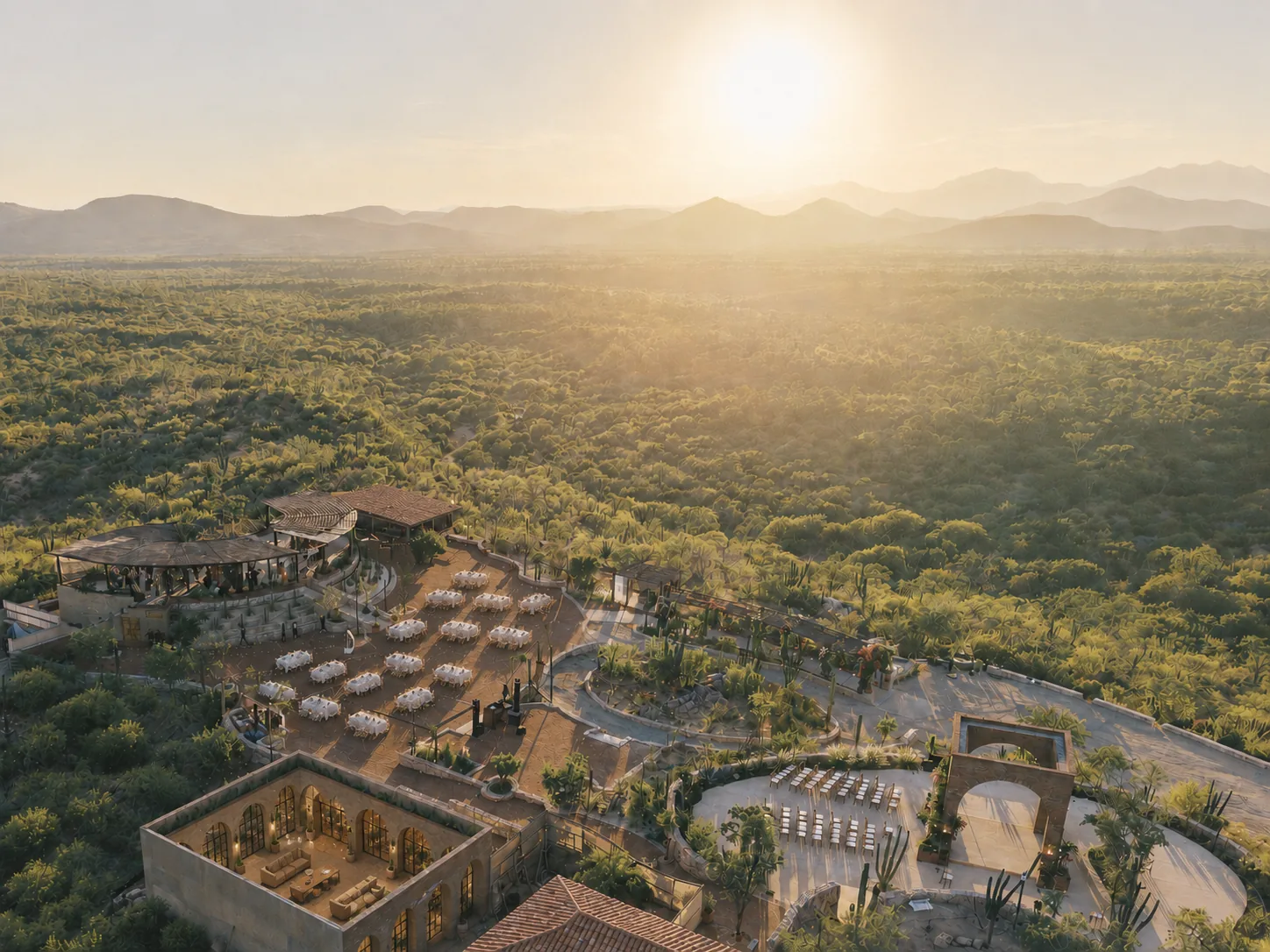
Baja California Sur · México

Los Cabos is a pioneer of organic agriculture in Mexico and one of the country's foremost producing regions — which sounds improbable, until you understand that this is a living desert.
The peninsula terminates here, almost precisely on the Tropic of Cancer, and what that yields is a tropical desert: a microclimate that scarcely exists anywhere else on earth. The year holds two seasons rather than four — eight months of spring and four of summer — conferring on this land one of the longest and most forgiving growing cycles in the country. Warm and sun-drenched through the day. Cool and comfortably humid by night, when the sea breeze returns.
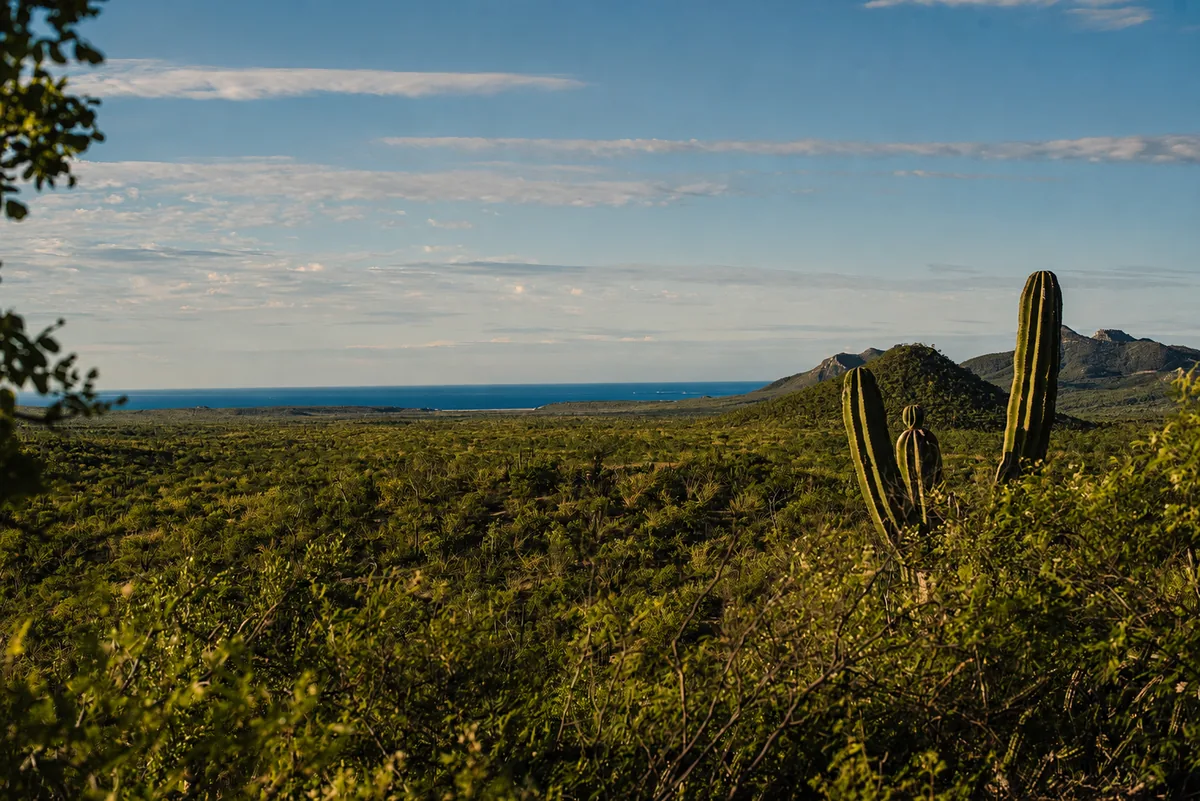
The phenomenon is legible from our hill. To the south, the Sea of Cortés sends up a warm, saturated breeze that crosses the estate all day. To the west, the Sierra de la Laguna sends down its opposite: cold, arid air off the high granite. The two currents converge above the sierra, condense, and the rain falls there rather than here — descending through the arroyos into the valleys, carrying the organic matter it has stripped from the slopes.
That granite has been weathering for a very long time. What settles below is alluvium: sand, mineral and organic debris in a composition that growers elsewhere spend generations attempting to build. A silt that will grow almost anything asked of it, and asks very little in return.
And then there is the isolation. This is a small town at land's end that behaves, in every practical sense, like an island. The population is sparse. Farms remain small. What thrives here has never required industrial seed, pesticide or herbicide, because the conditions never made them necessary — the land was left alone long enough to keep being itself.
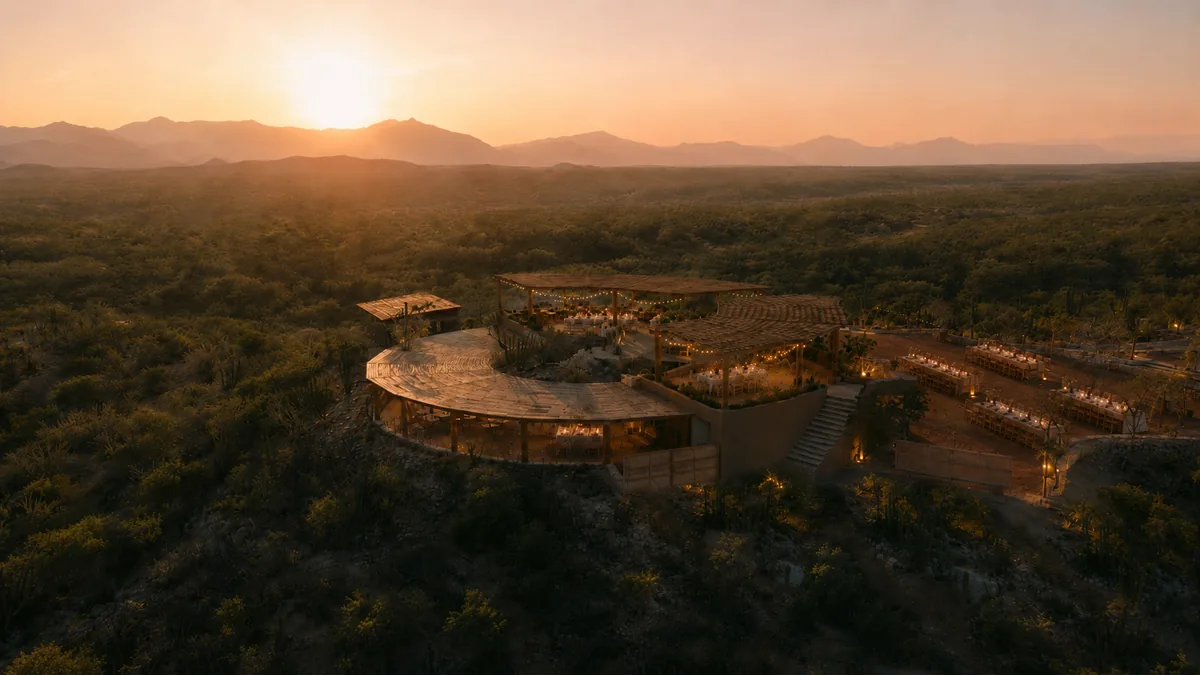
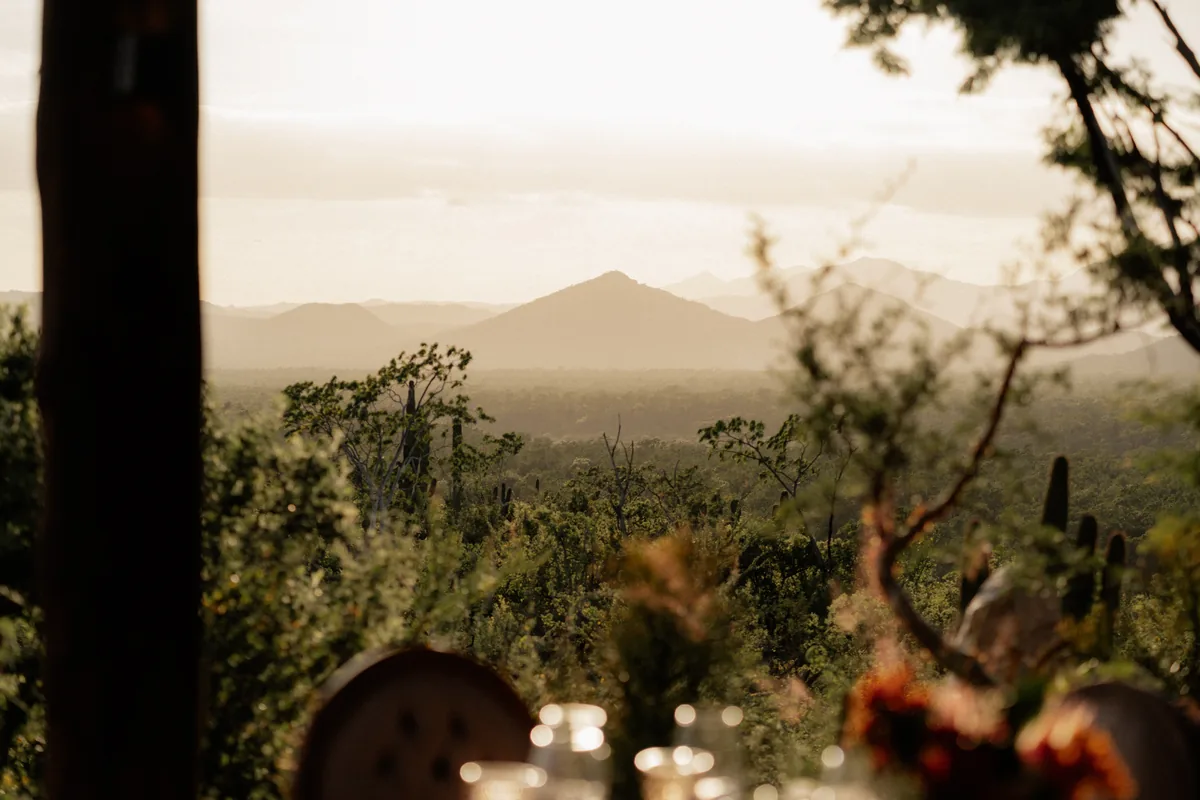
From the top of this hill all of it is legible at once: the desert, the valleys, the sierra, the sea. A fertile desert is a contradiction, and so, at first glance, is an estate in the middle of nowhere. Both turn out to be the same idea: this is the terroir, and Monte Cardón grew out of it.
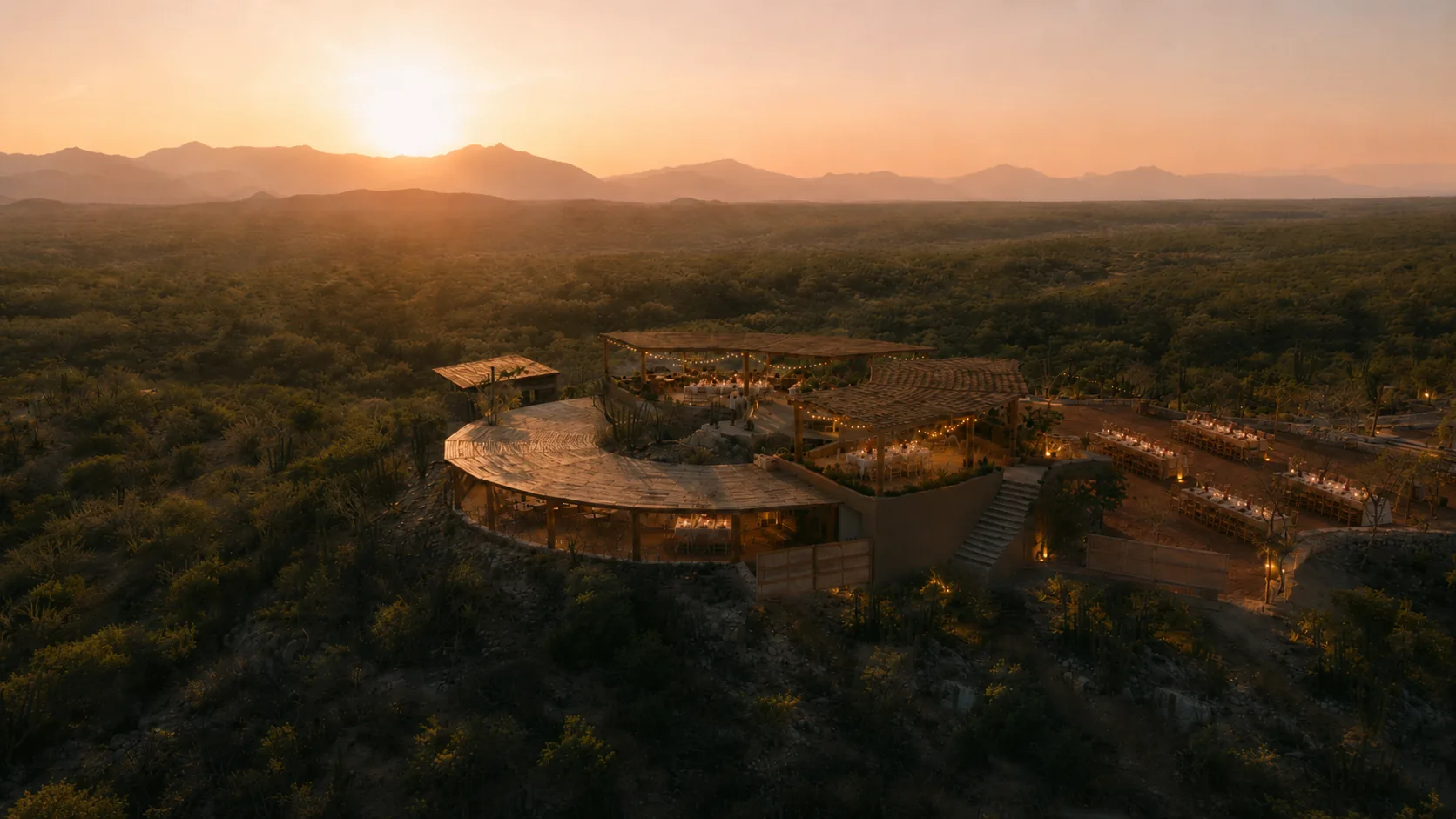
The place was not so much built as found — cut, turned, and polished until the beauty it had been hiding came out.
We found it during the pandemic, in the days when time ran slowly and we camped along this desert and this coast wondering whether our life in hospitality had ended. We did not know whether our world — noisy restaurants, tables held together by conversation, glasses filled and refilled, dishes that warm the soul — would still exist when the world went "back to normal". It was in that uncertainty that we found it: a rough stone, uncut, and we set out to polish it. No map for the road, and a very clear destination.
Ground broke in 2022.
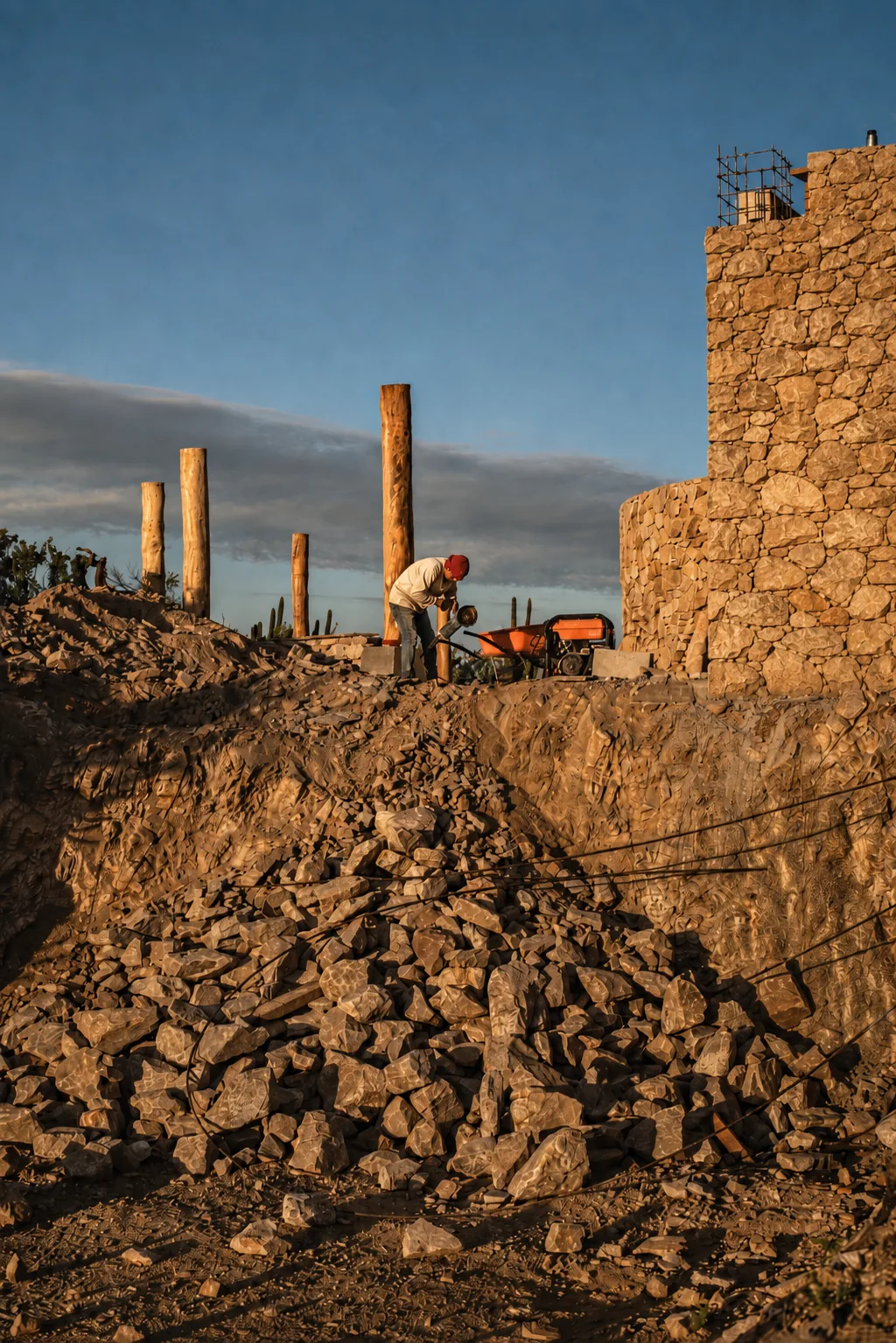
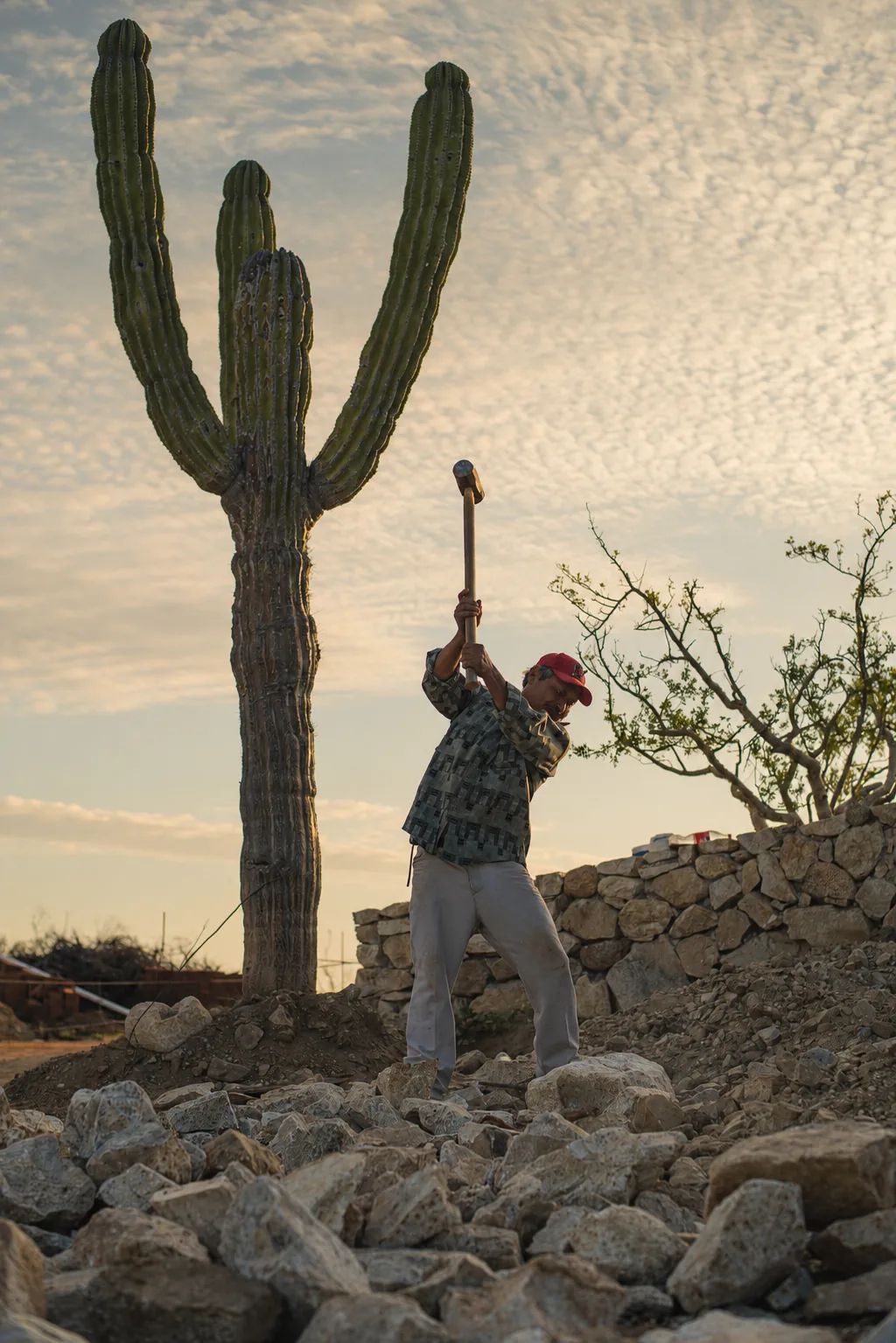
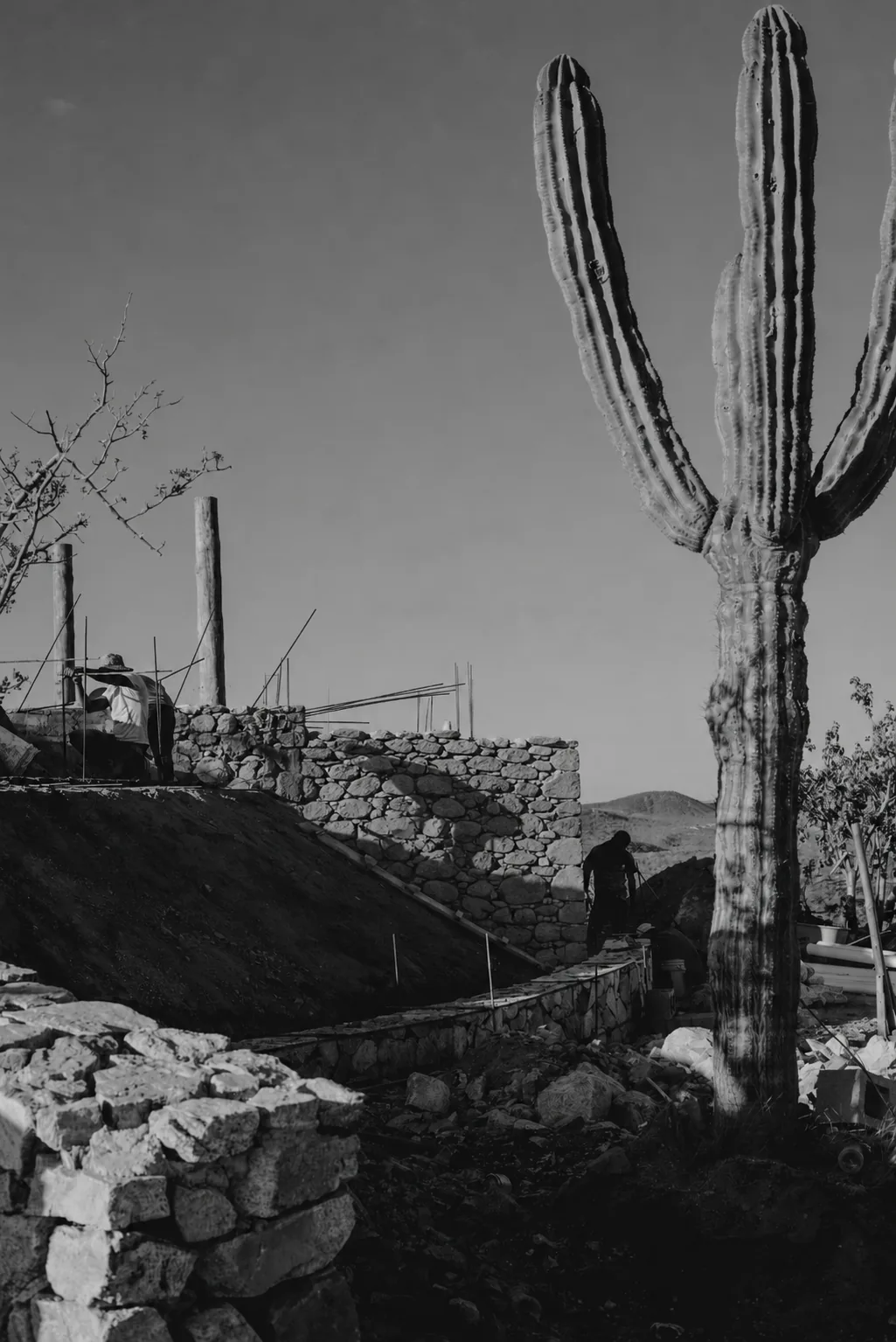
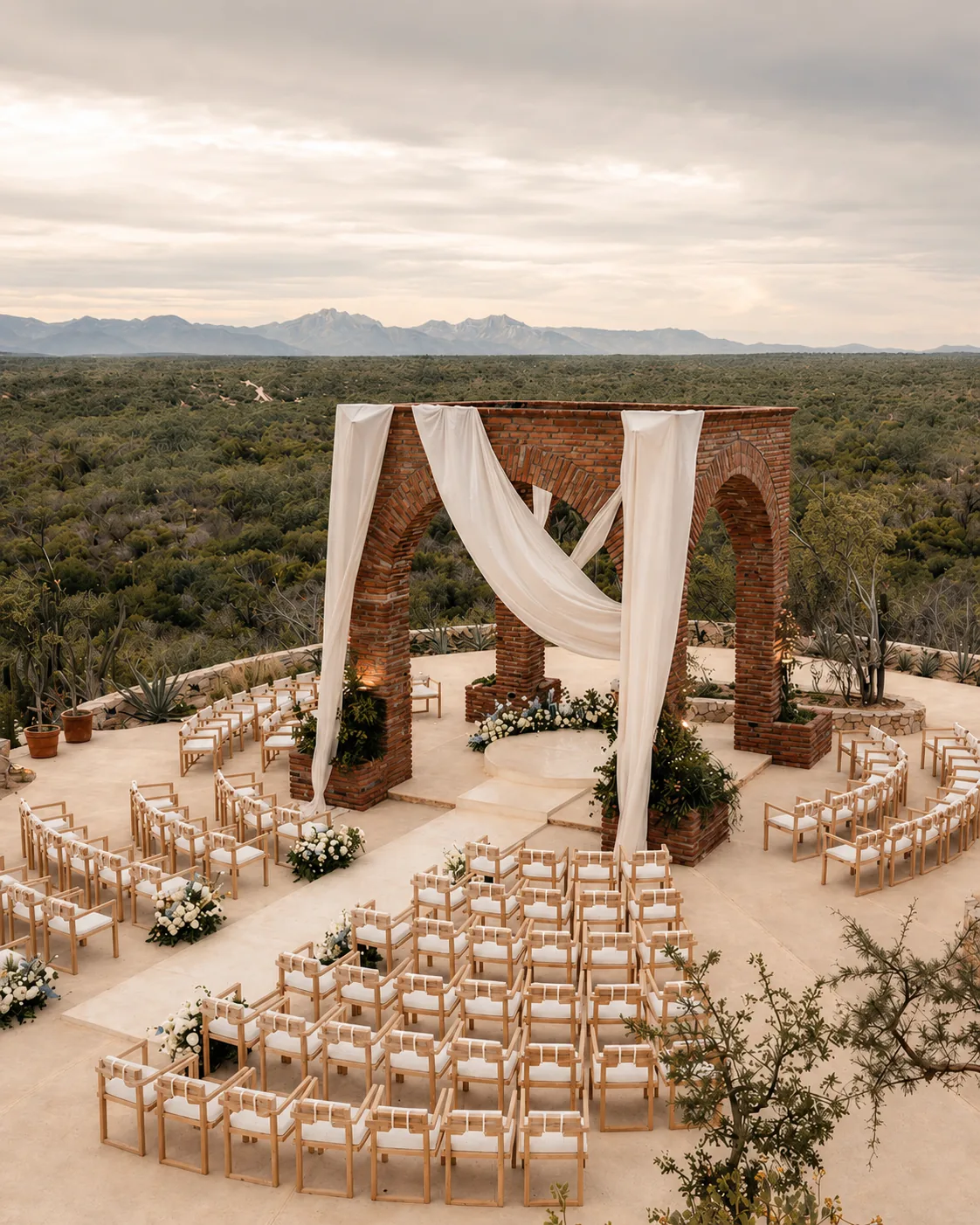
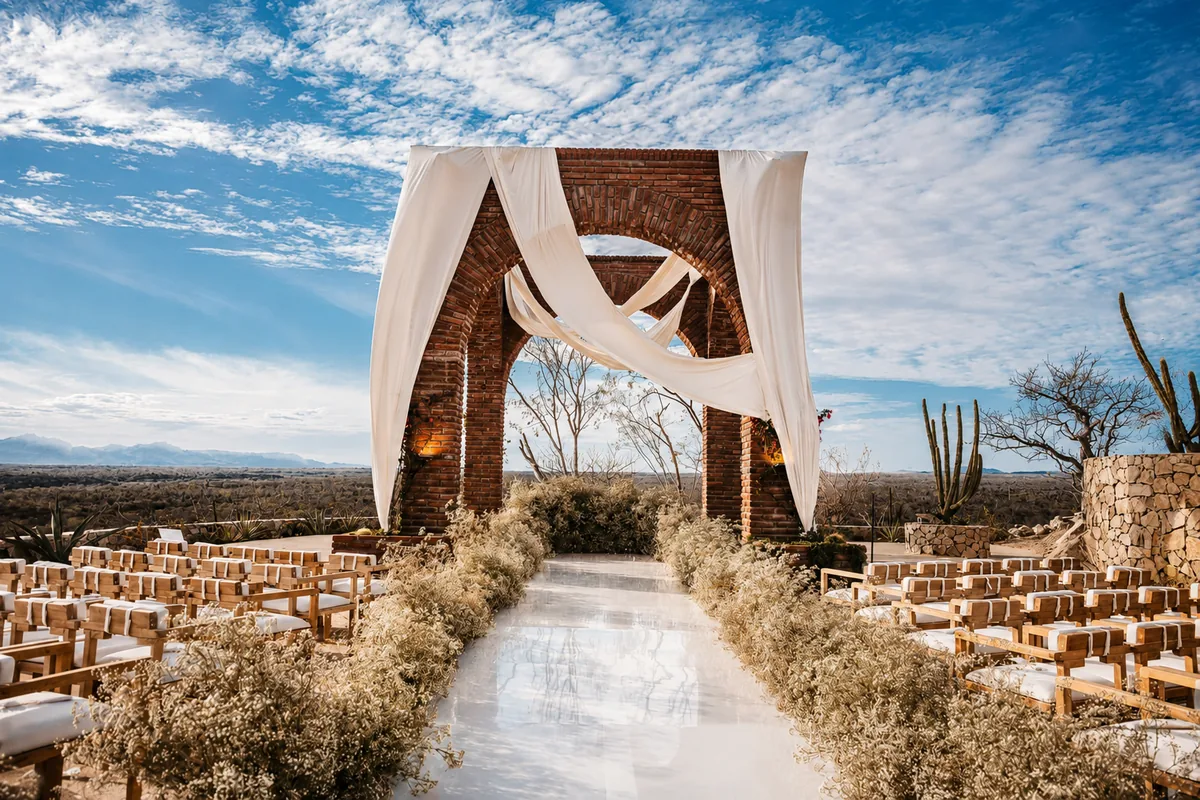
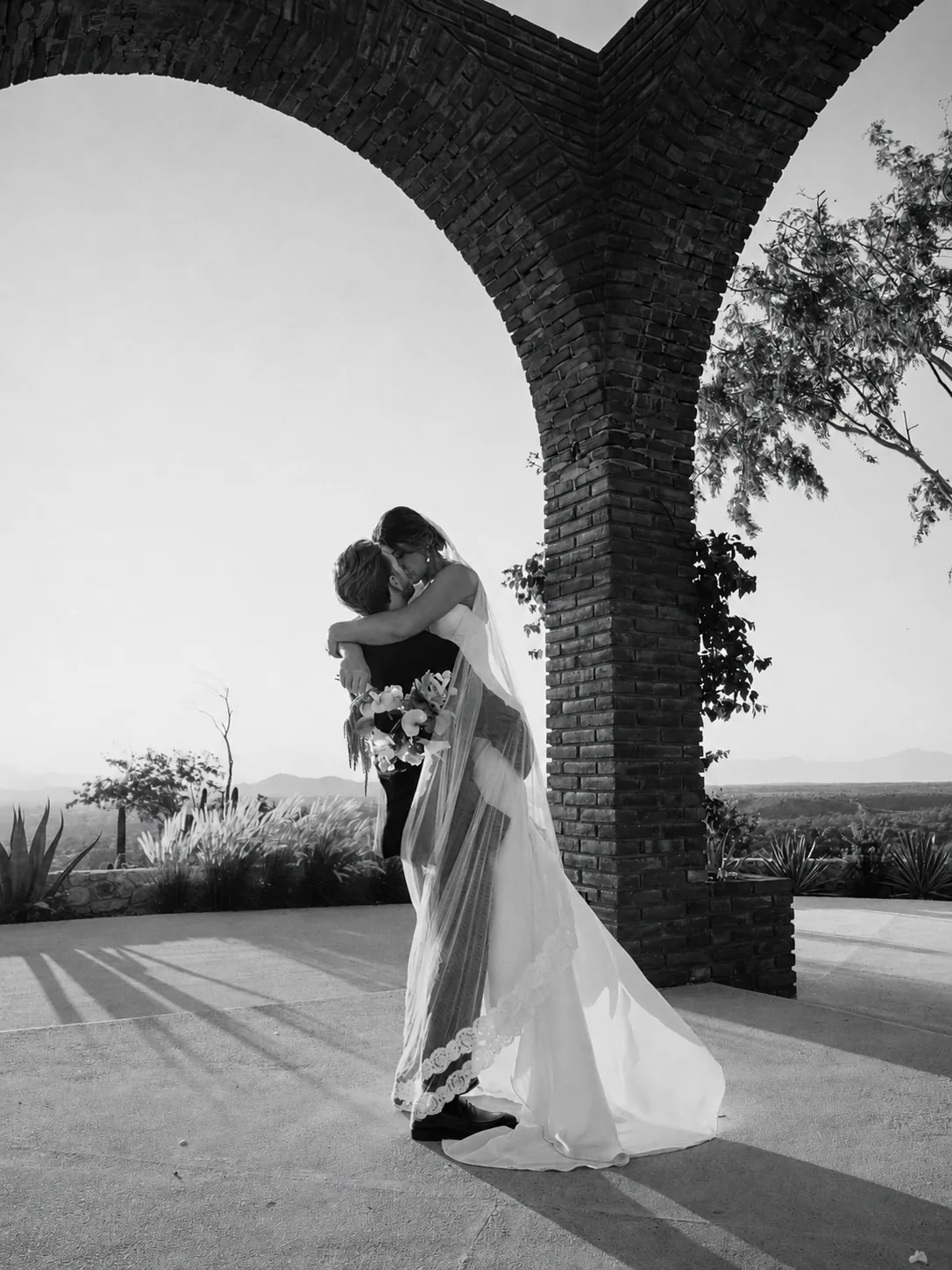
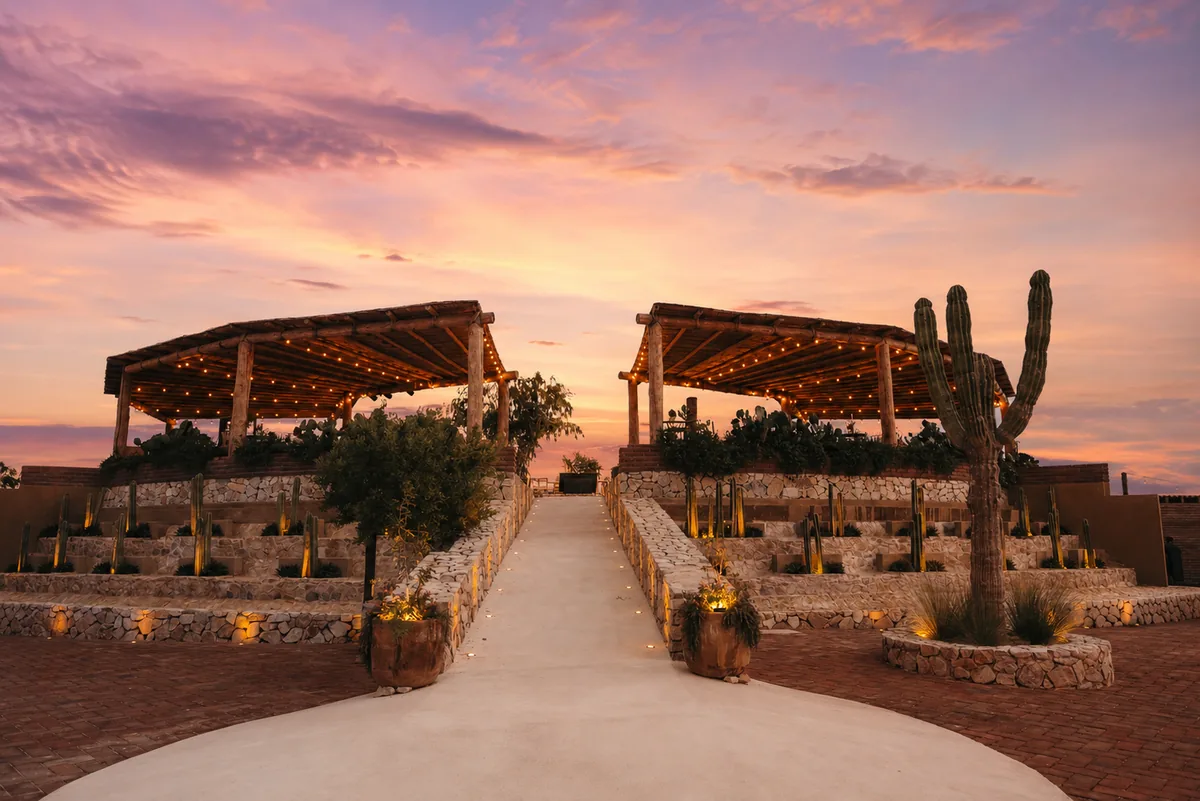
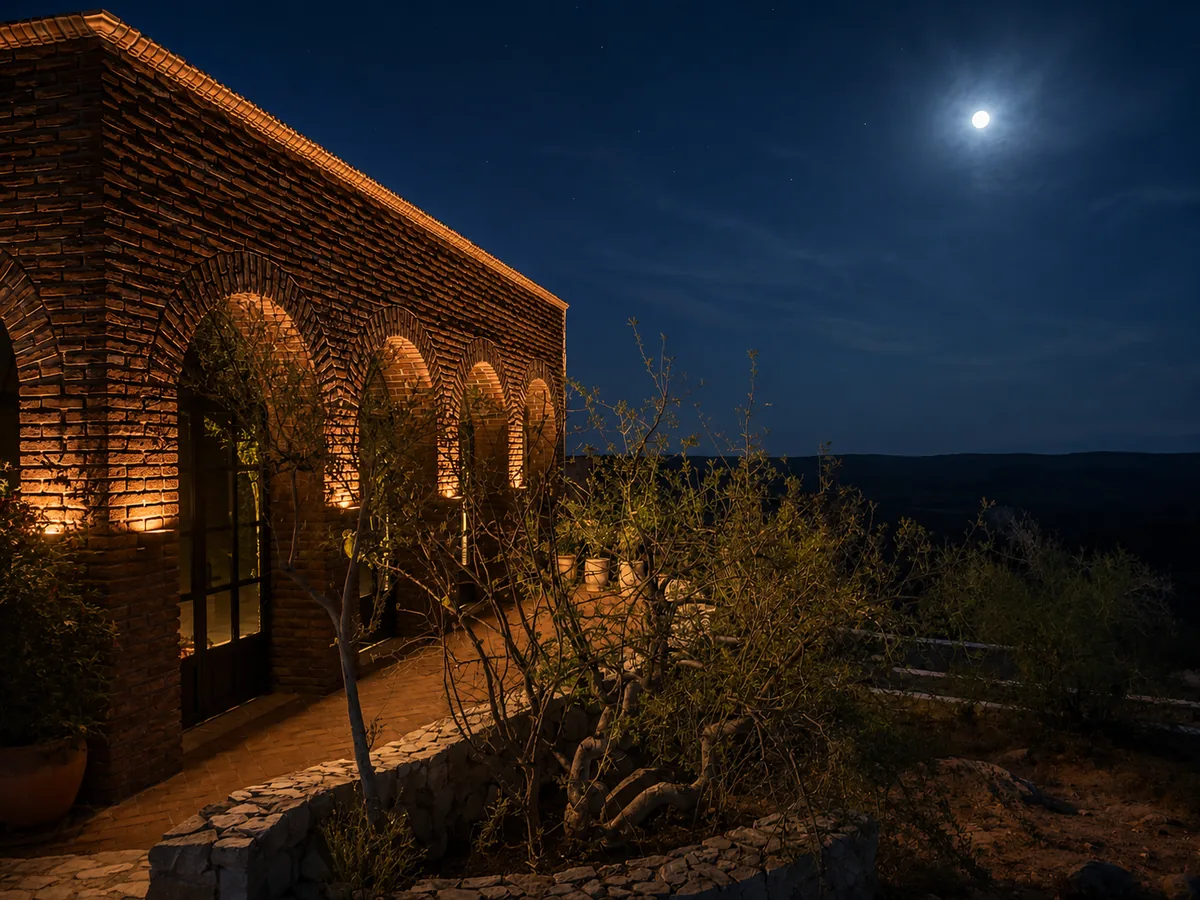
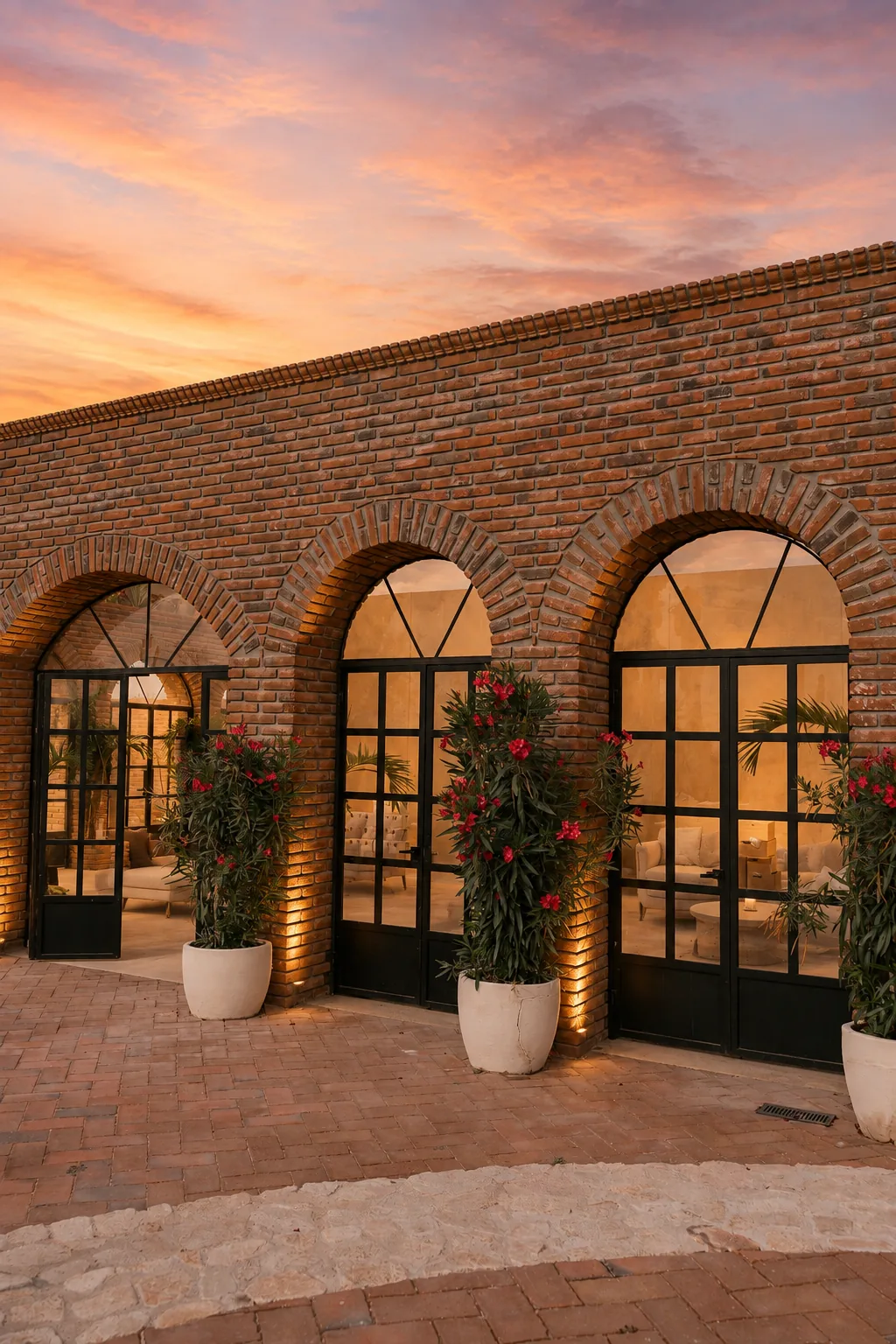
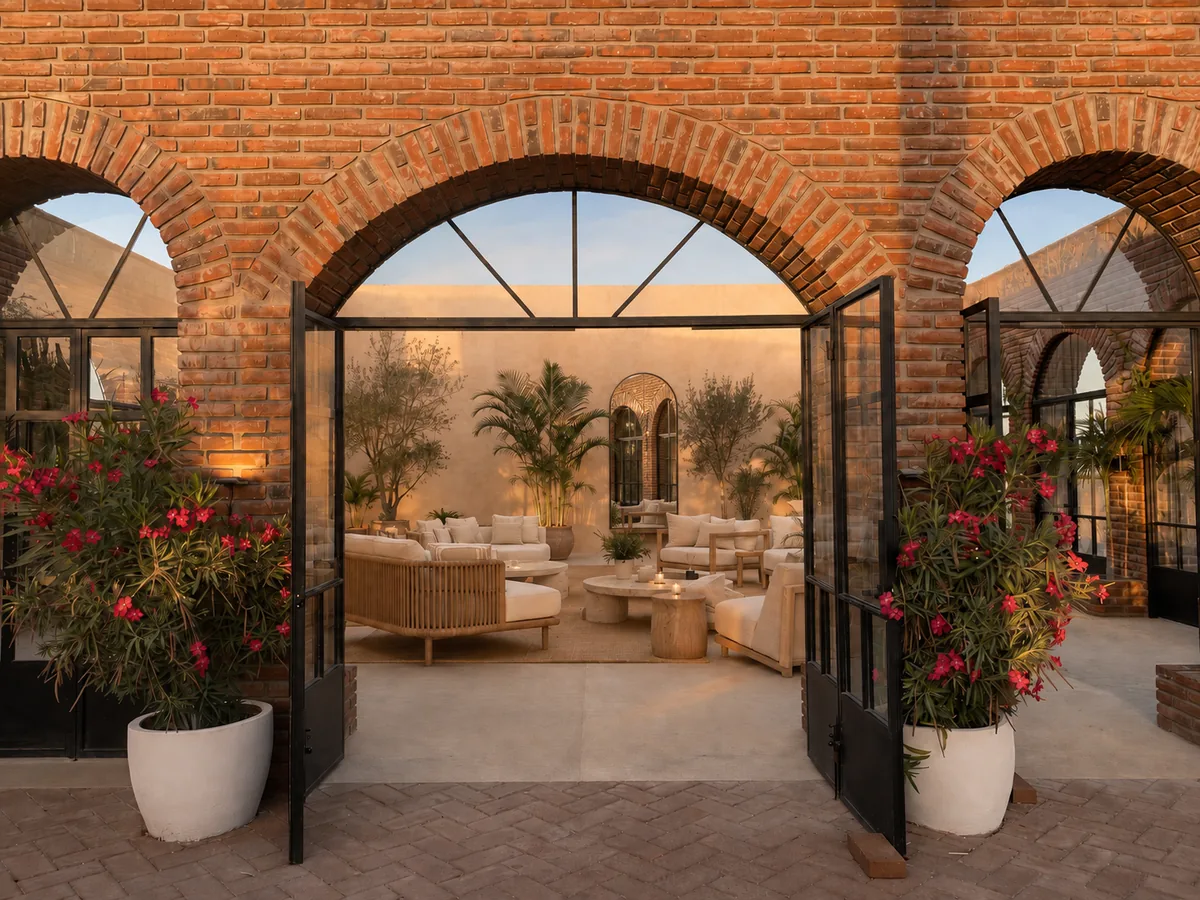
The architecture revealed itself, almost. Rather than being designed, each space was uncovered — Ourem cutting into what was waiting to be found, bringing out one facet at a time, as though the land were dictating where things should go. Granite was broken to form terraces. The red soil of the property was fired into terracotta: the brick that became the floors, and the arches.
Nothing was brought in to make it resemble somewhere else. The walls are the stone that was already under our feet. The floors are the earth we stood on, baked. The color on the walls is that same soil, ground and worked into the finish. Beams and pergolas came from local woods.
This is terroir made architecture — a place drawn out of the desert rather than set down upon it, until the two stopped being separate things.
We do not purchase on demand. We work with what the land and its growers give.
Sustainability sits at the core of the slow food philosophy. The estate is powered entirely by the sun and runs completely off-grid — once again, what runs here is what the desert provides.
The same conviction governs provisioning. Our principal produce is sourced from growers within reach of the estate, and we buy by season rather than by order: we do not purchase on demand. We work with what the land and its growers give. That is farm-to-table at its original idea — a philosophy carried into practice.
Vegetables come from the local organic growers' cooperative, the same one you can meet any Saturday at the farmers market — whatever is in season, whatever is ready that week. Goat cheese comes from Rancho Santa Rosa, made by Benito Cota on his ranch in the Sierra de Santiago, where his goats graze on wild herbs endemic to that sierra — which gives the cheese notes I have never found in any other.
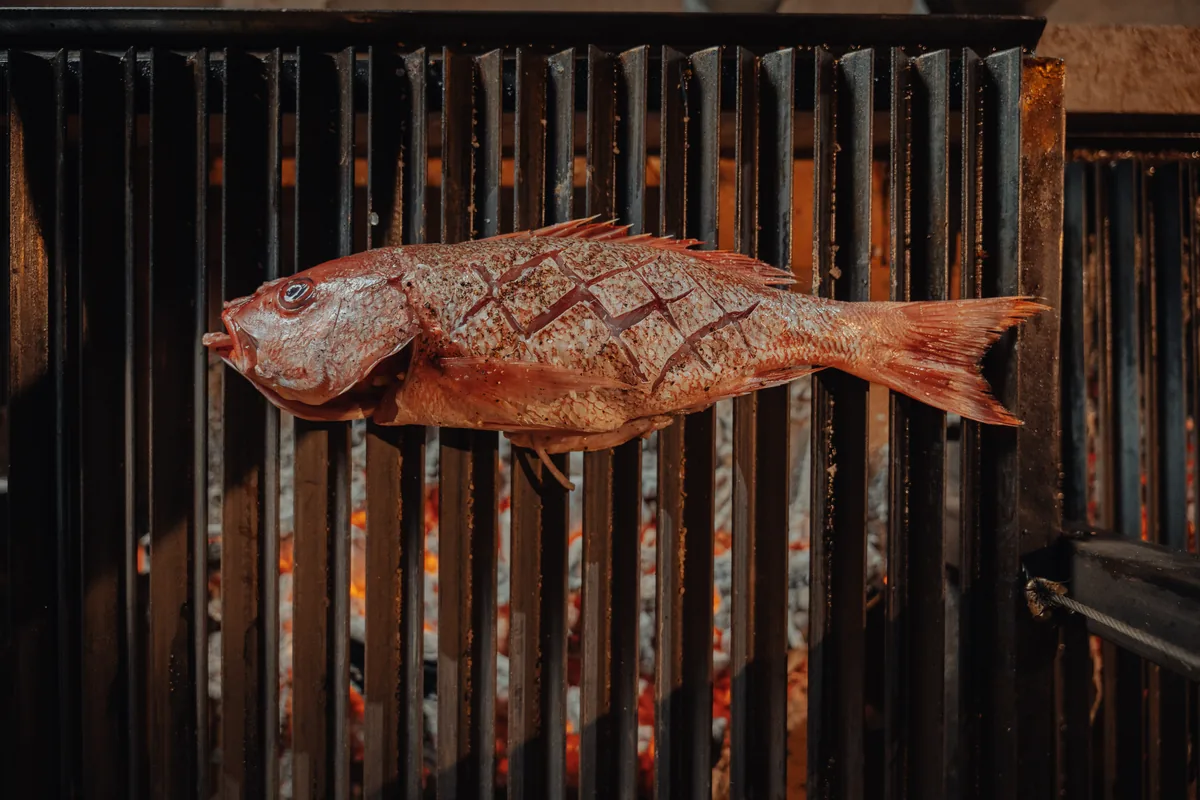
And the fish comes from the fishermen's cooperative at La Playita, straight from their pangas, still carrying the smell of the morning sea. What they lay out in front of you on the shore is a spread of fish that were swimming a couple of hours earlier, chosen there beside the boats and taken directly to our kitchen, to be cooked over wood.
Seafood and firewood. It is the heritage of this region's cooking, and it belongs to the Pericúes — the people who lived on this coast long before anyone else, and who ate exactly this way.
Provisioning this way means less packaging, fewer plastics, and a shorter road between the ground and the plate. And it means the thing that matters most to us: that small producers are paid fairly for a place in the supply chain of luxury hospitality — a chain they are ordinarily left out of. For a chef who comes from a family of ranchers, people who lived off their own soil, nothing carries a greater sense of pride.
The kitchen is the hearth of the estate, and its atelier — where everything converges into the one thing that holds our whole story together: the food.
It is the thread that runs through all of it. The act that consummates slow food is a plate set on a table, and every story of this place travels with it: the land, the season, the growers, the fire, and the people who make all of it possible. Shared slowly, with the people who fill our hearts with joy.
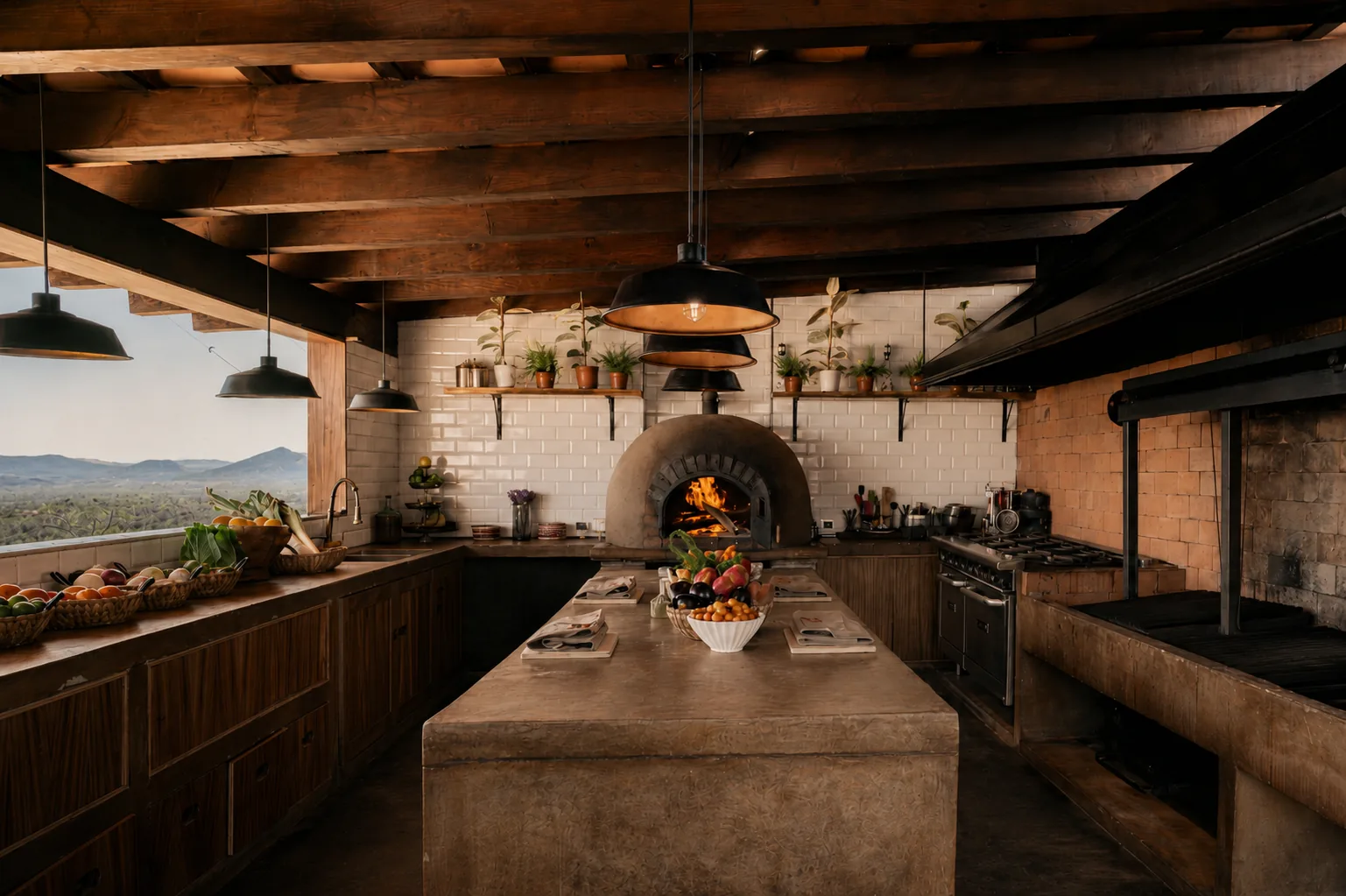
The space is a Baja ranch in style, with a touch of a provincial kitchen from Tuscany or Provence. The oven is built of terracotta brick and clay, and fired with mauto — the endemic mesquite of the Sierra de la Laguna — which fills the estate with its warm, spiced fragrance while the fruits of this earth cook inside it.
The window of this kitchen frames the source of everything that arrives here. It looks out over the mountains and the ocean — the two places every ingredient comes from.
The plates are, as a result, a combination of Baja ingredients, Mexican heritage, and a Mediterranean flair. "A pairing of my grandmothers, my mother, the family ranch, and every place I have traveled that left an imprint on my soul and my palate."
J. Ubaldo Martínez Silva · Founder & Executive Chef
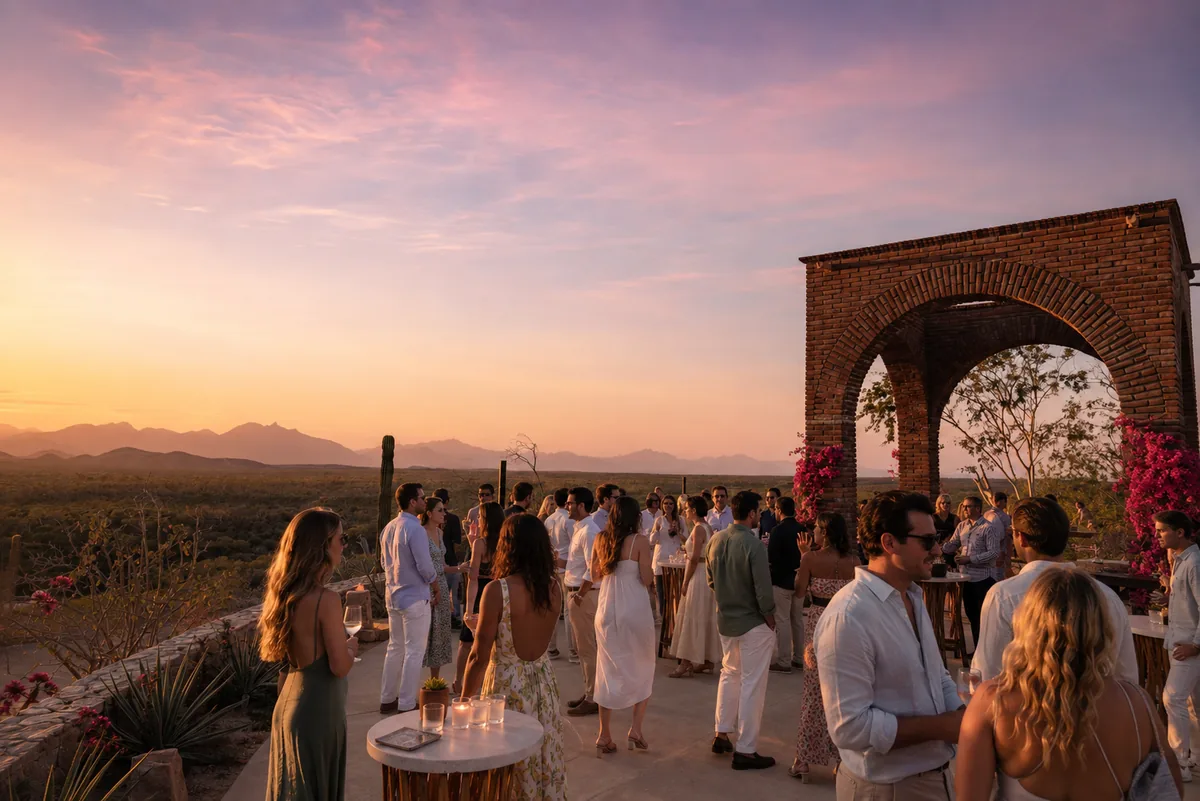
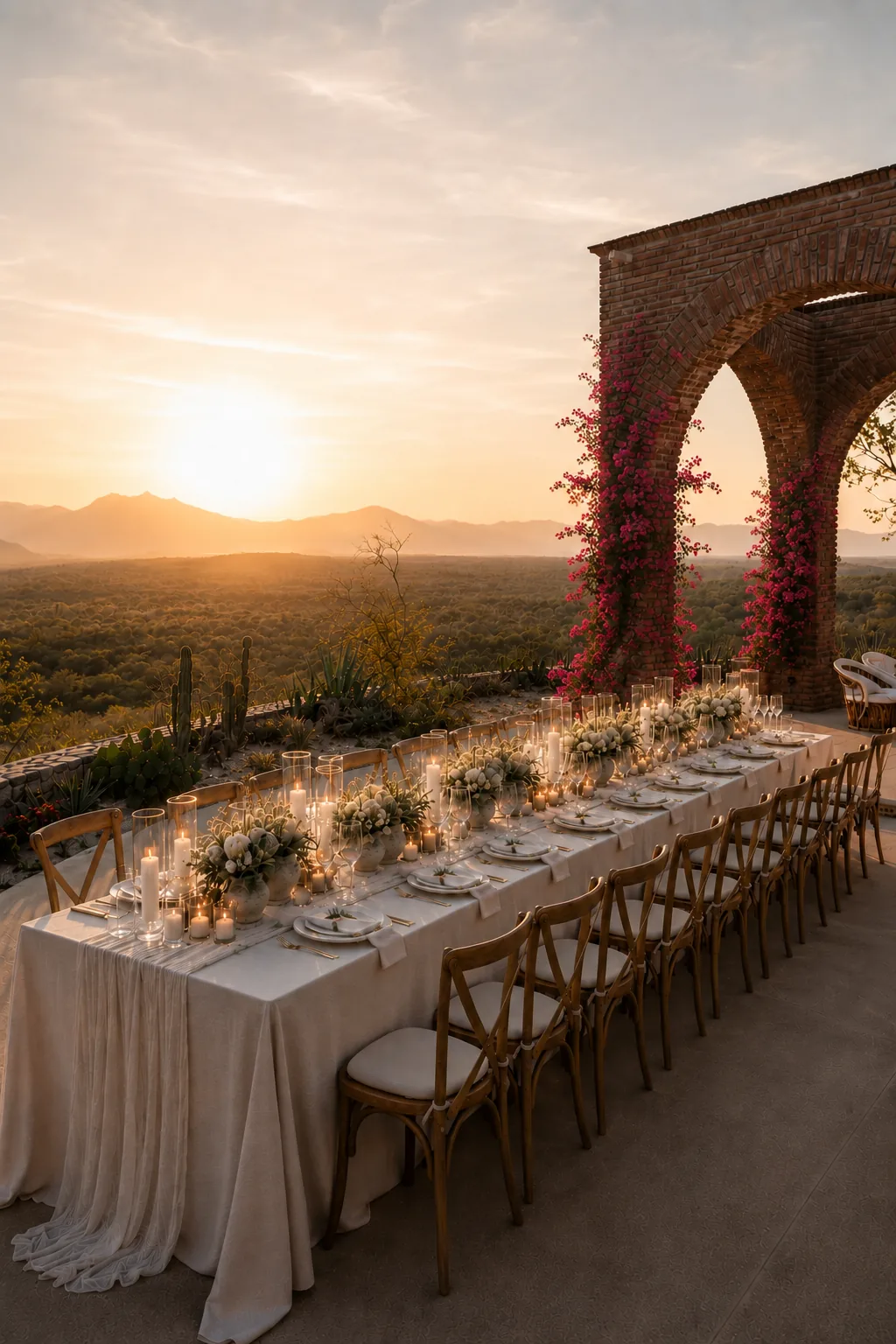
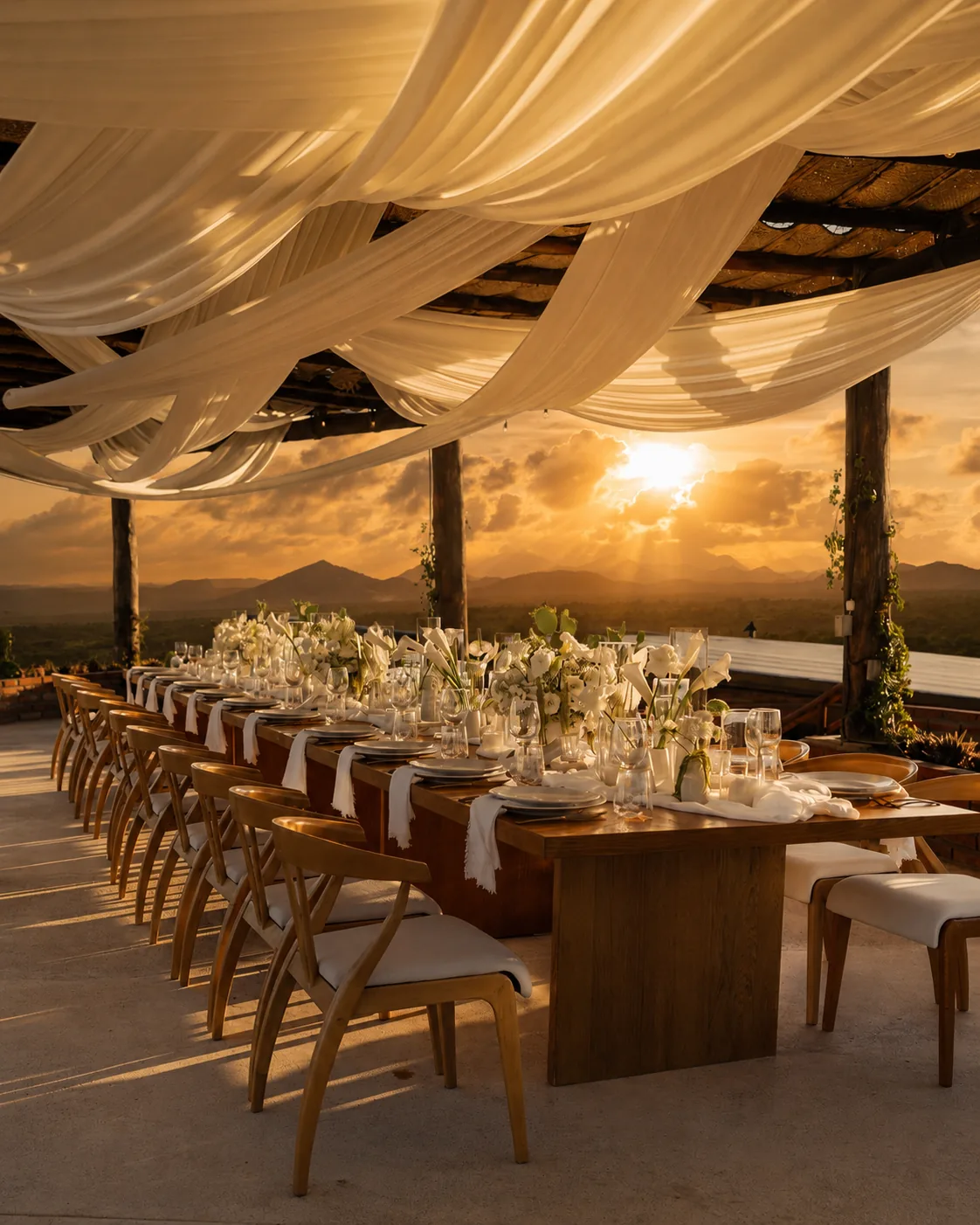
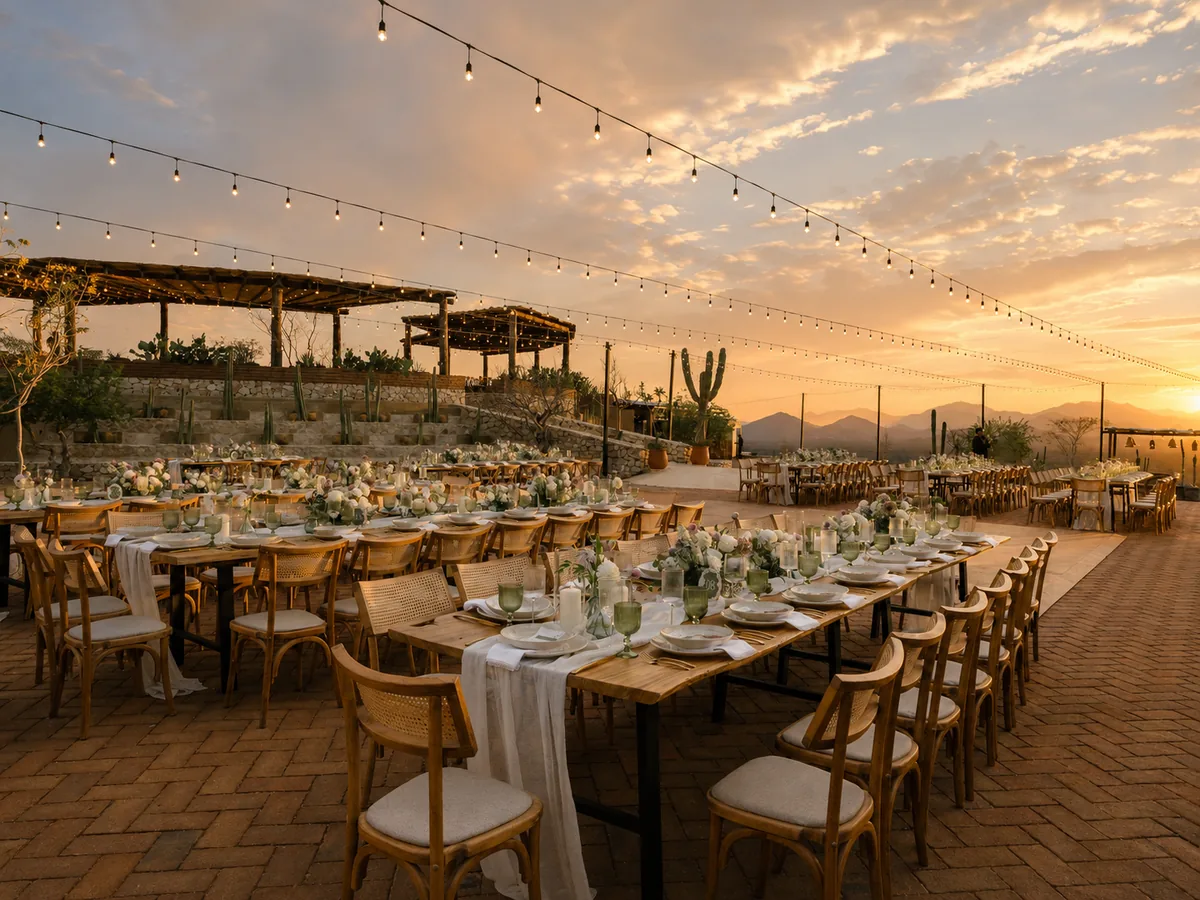
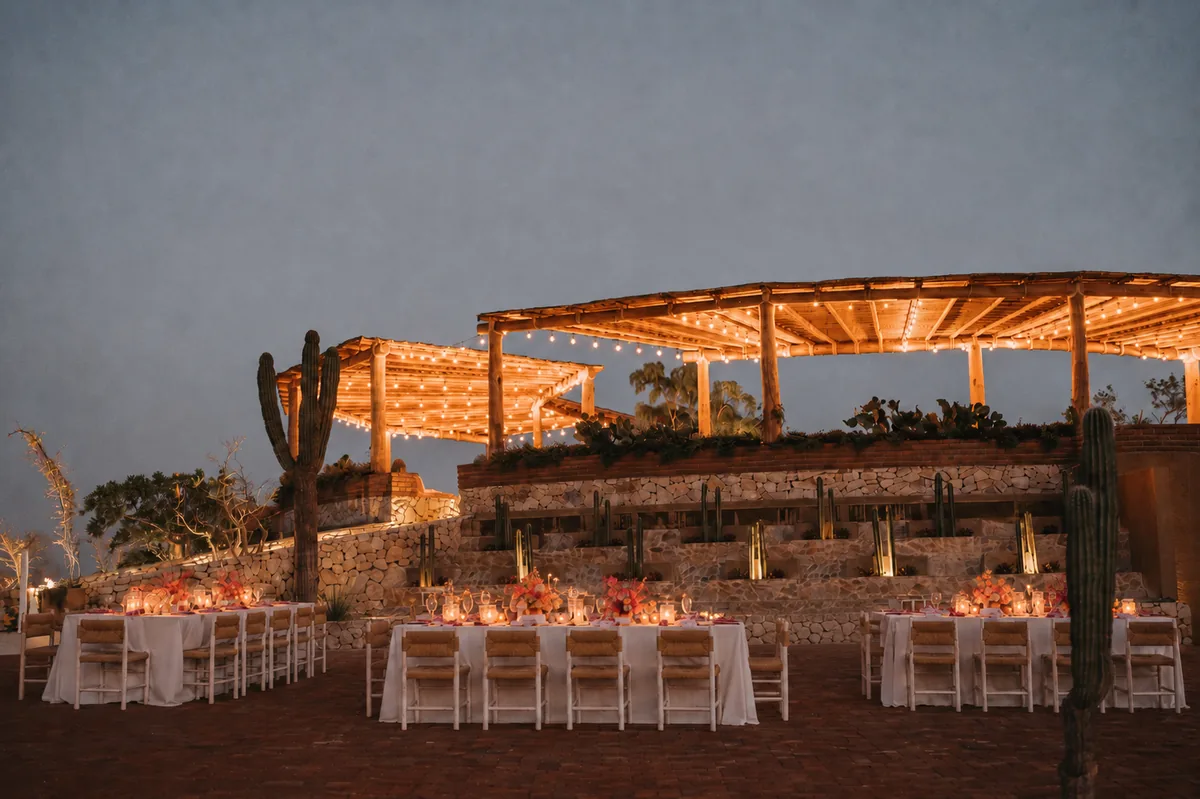
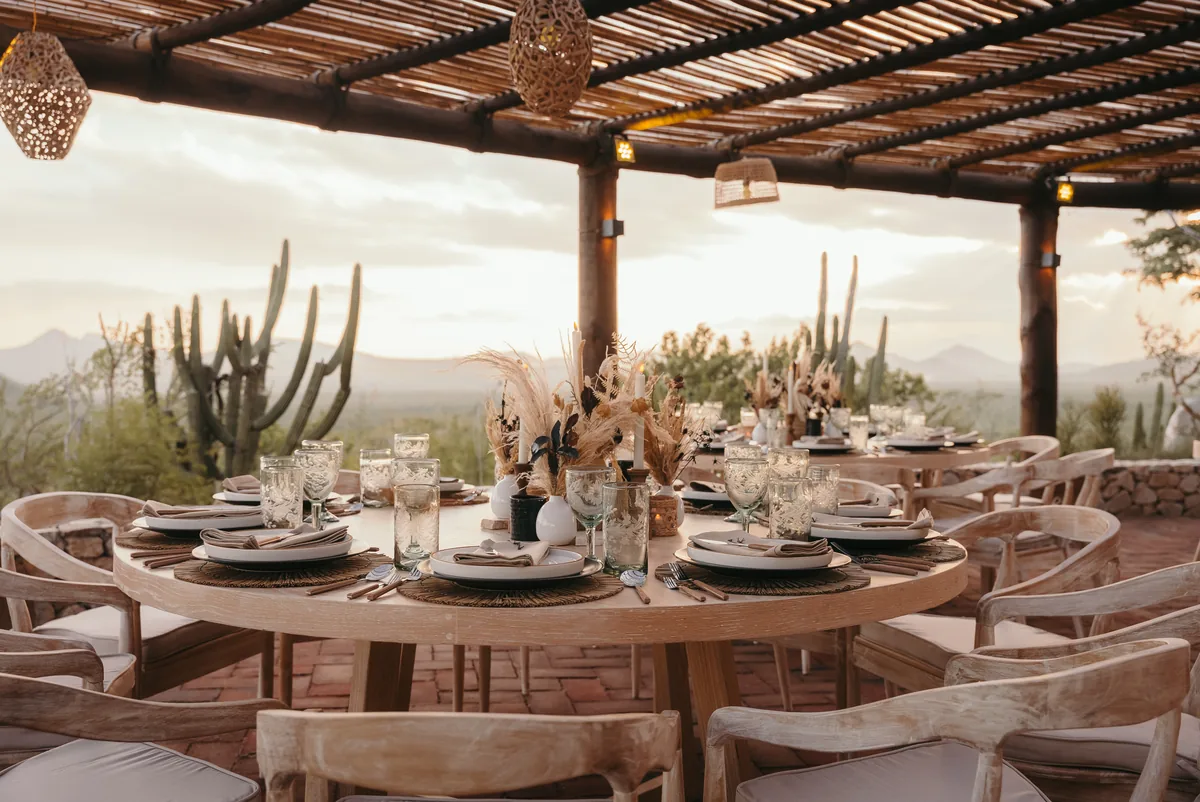
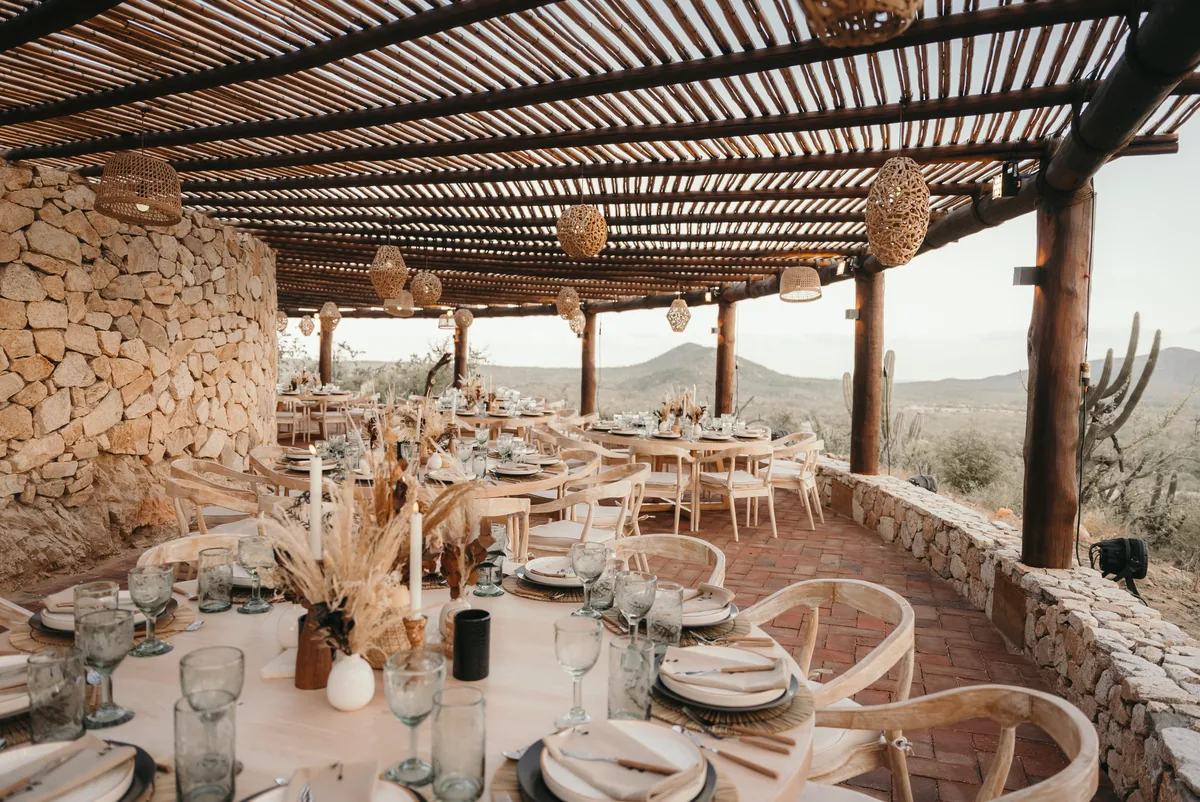
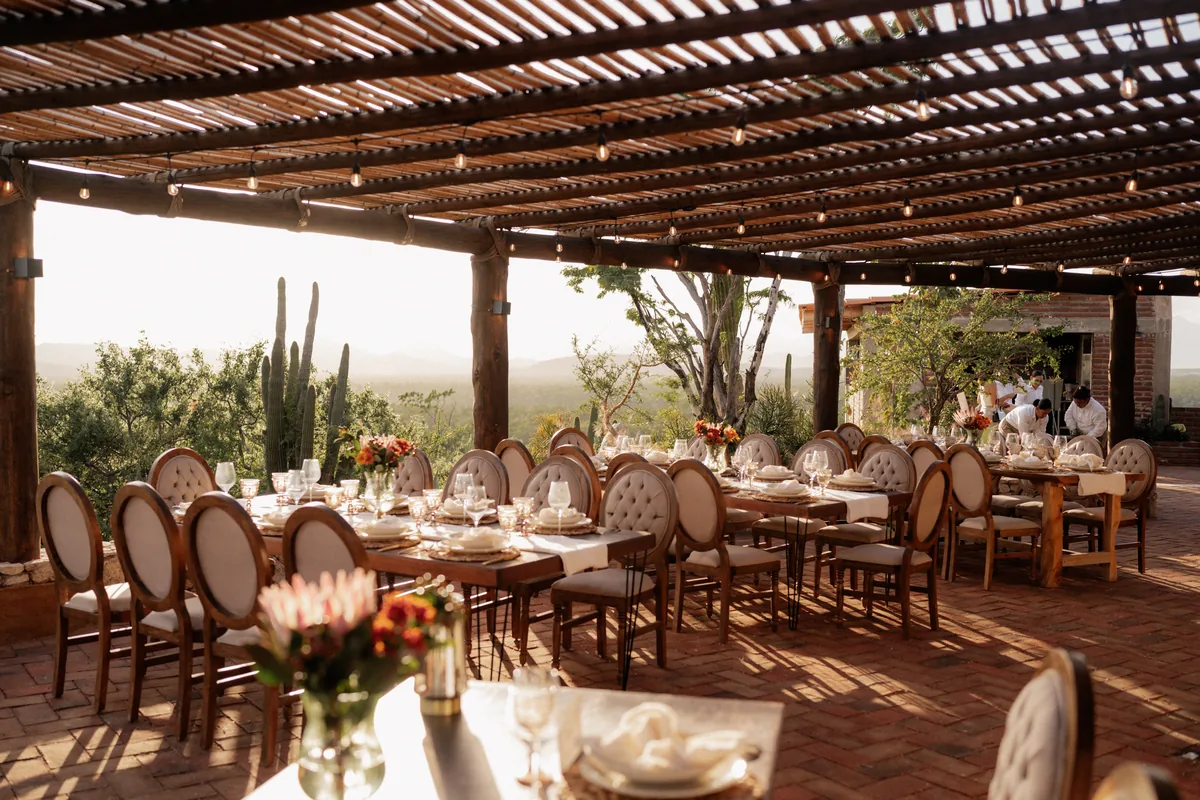
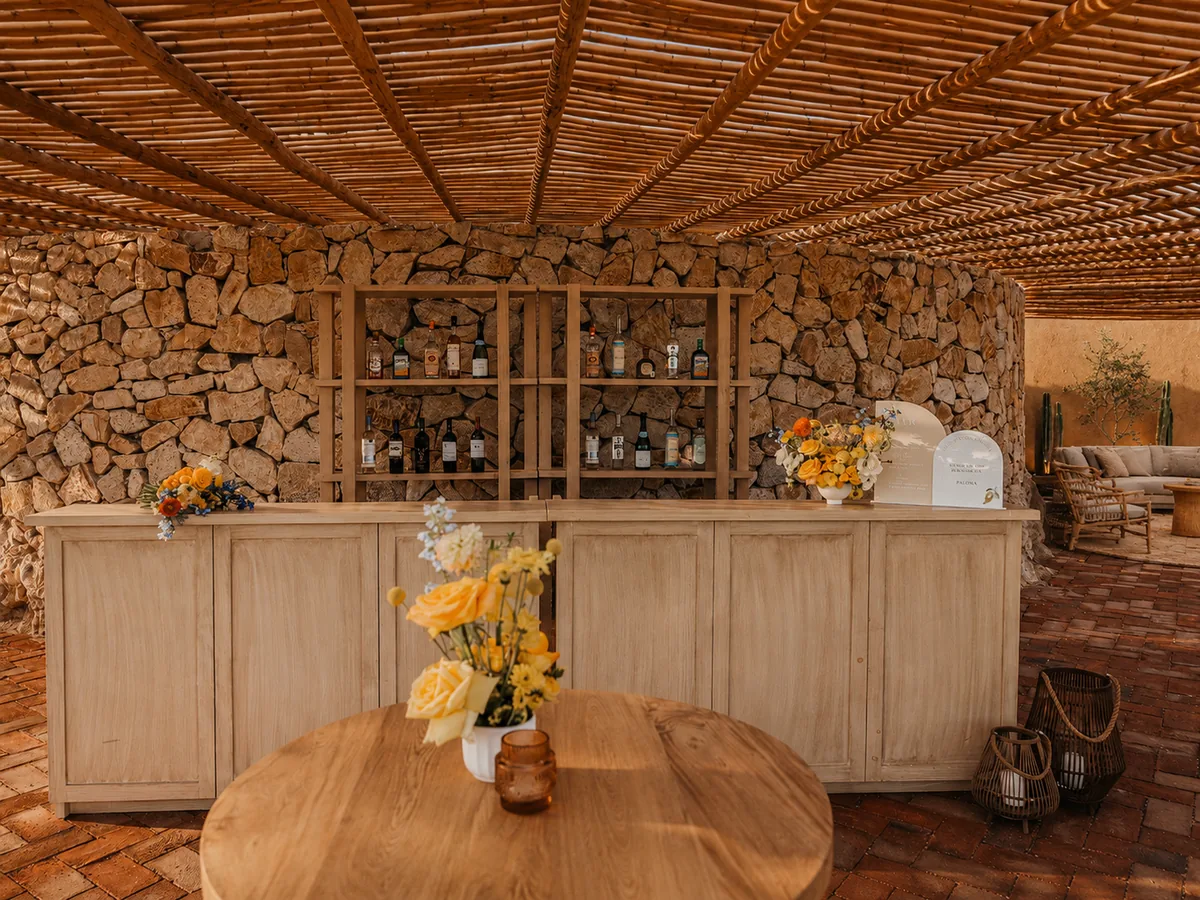
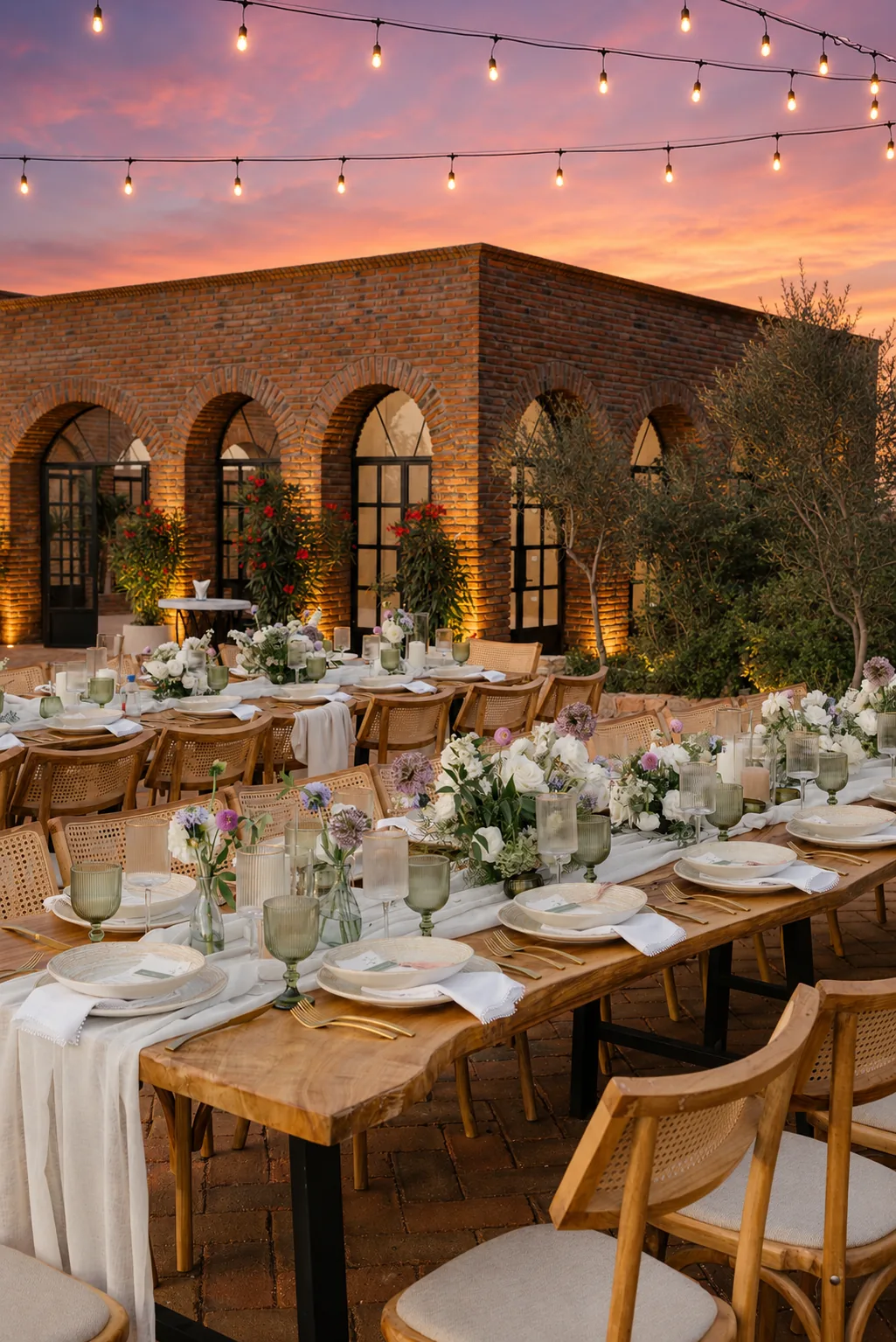
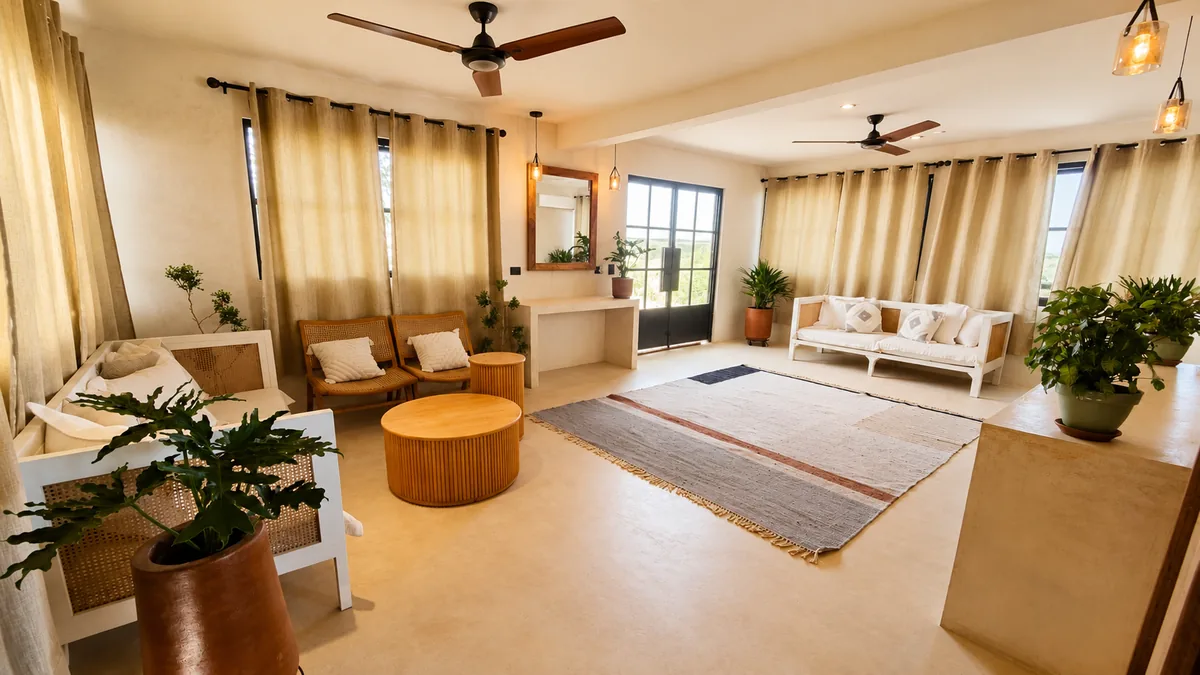
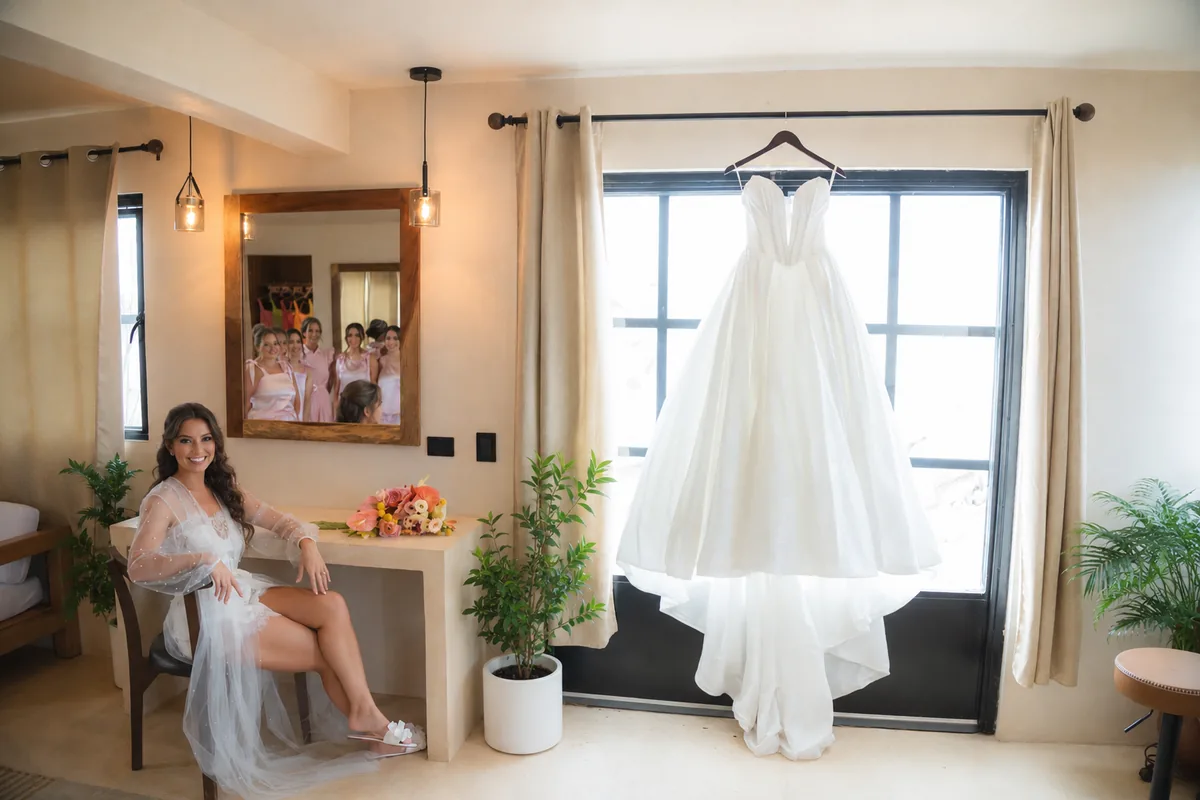
Each space was built for a different hour of the day and a different kind of gathering. The estate hosts one celebration at a time, so all of them belong to whoever is here.
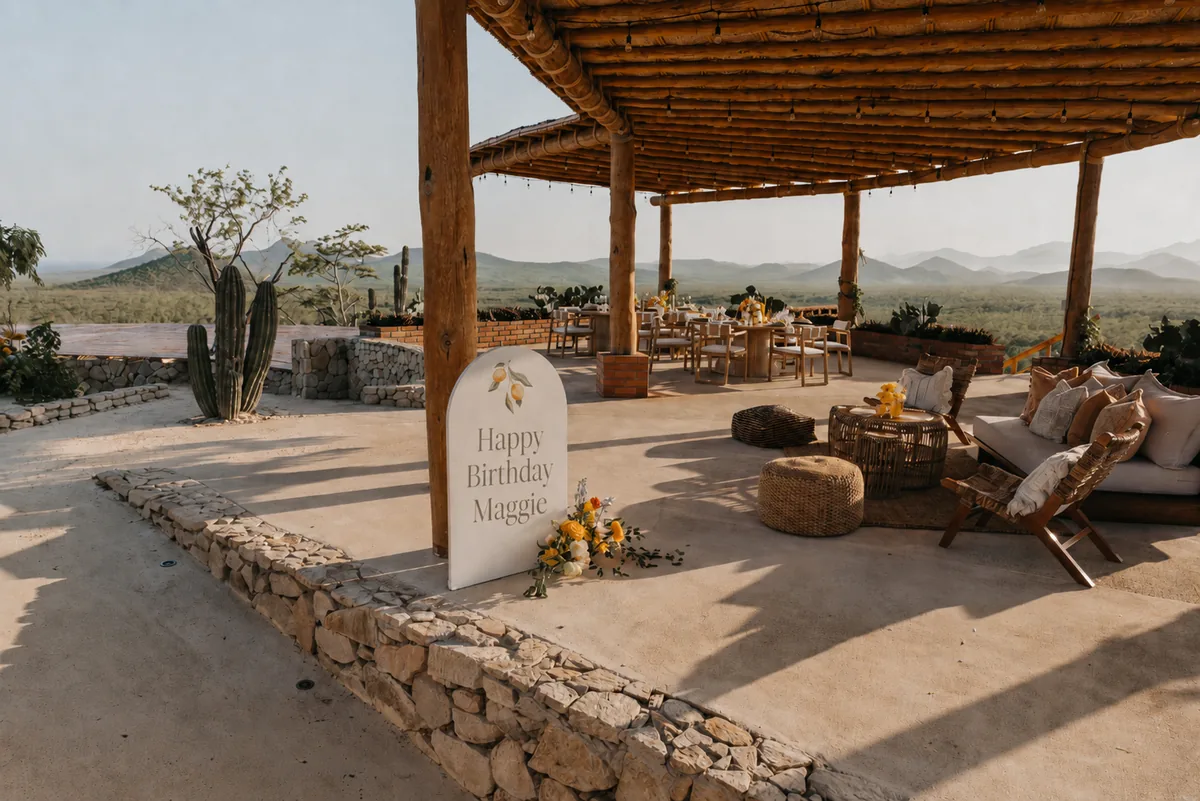
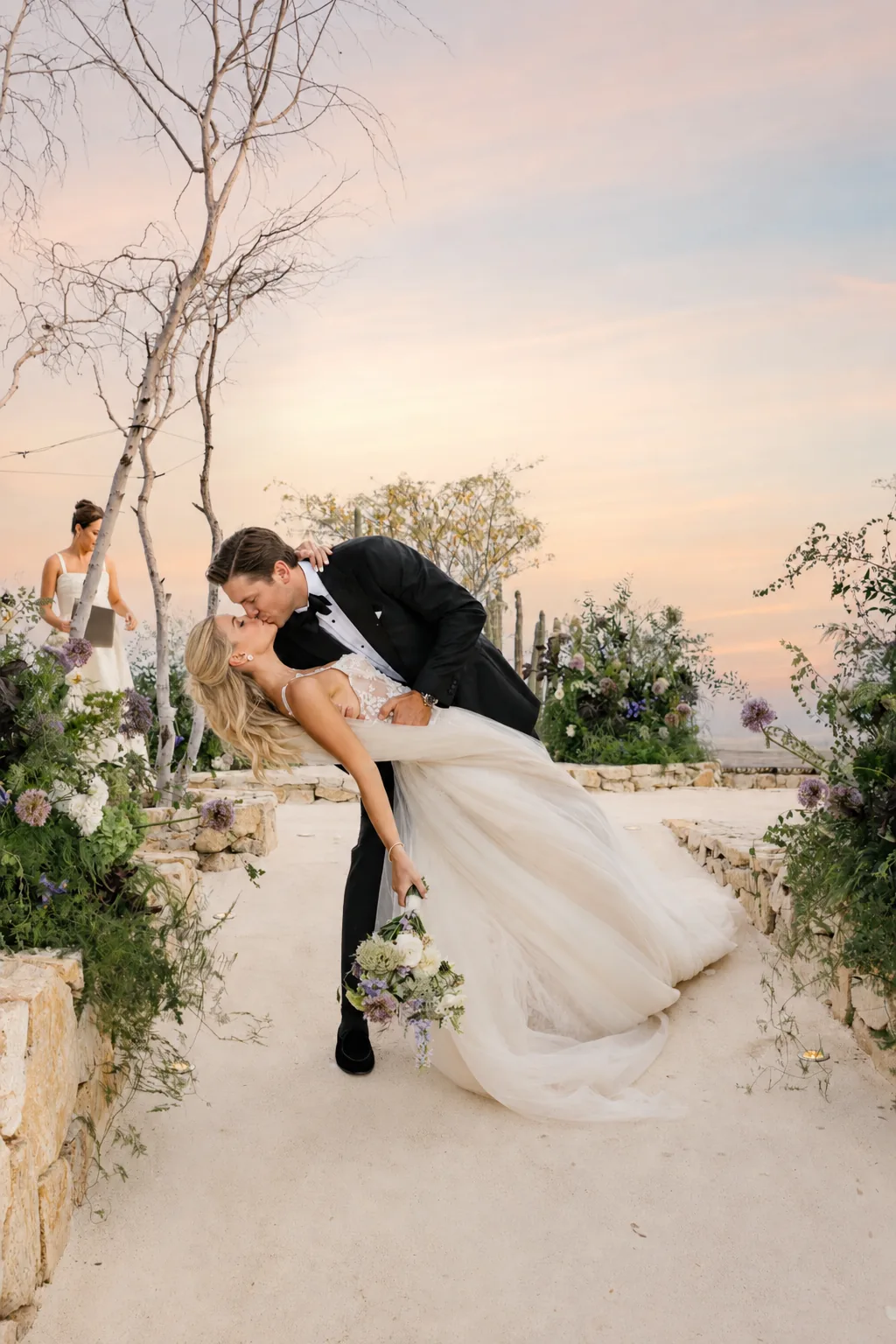
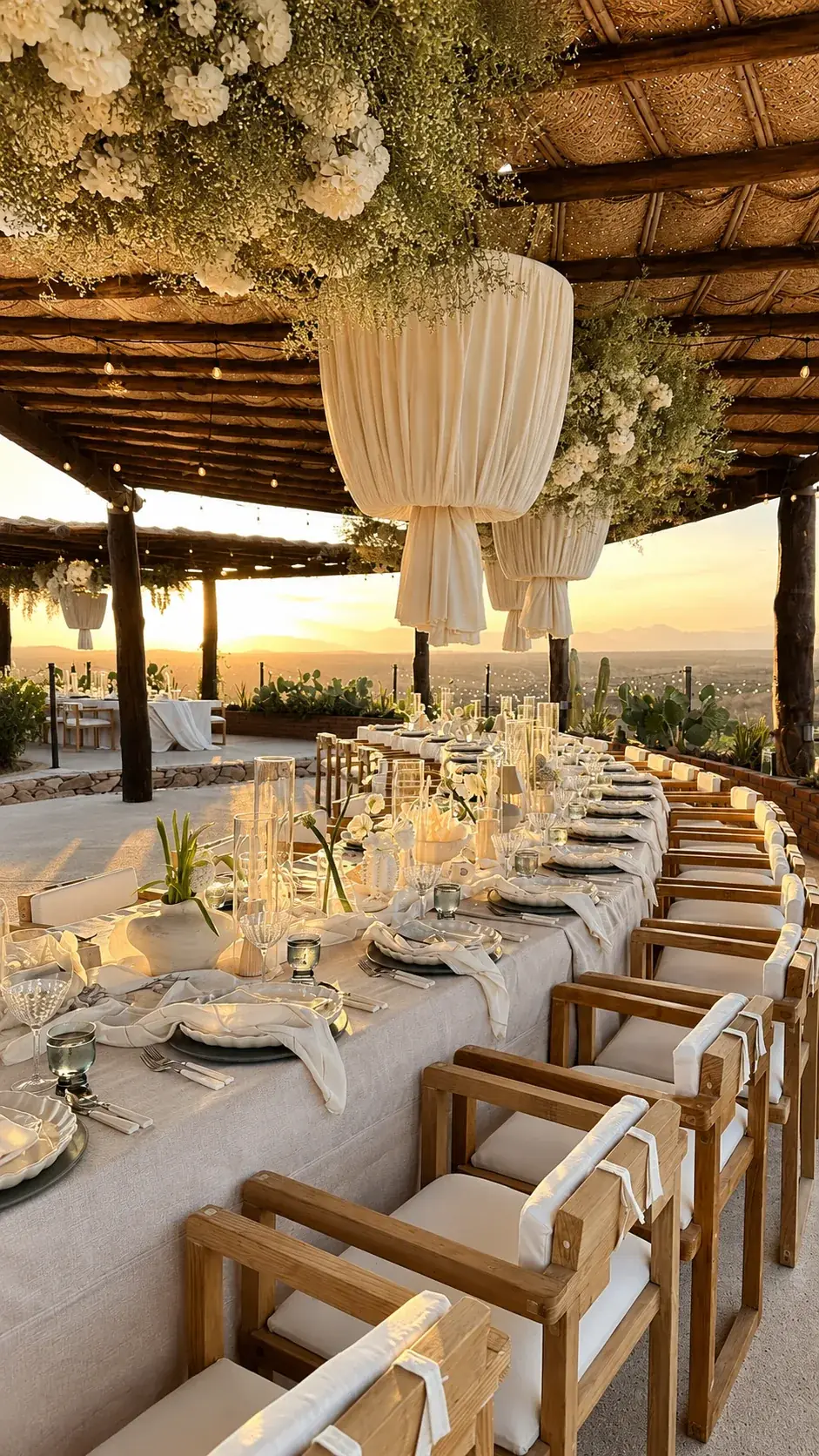
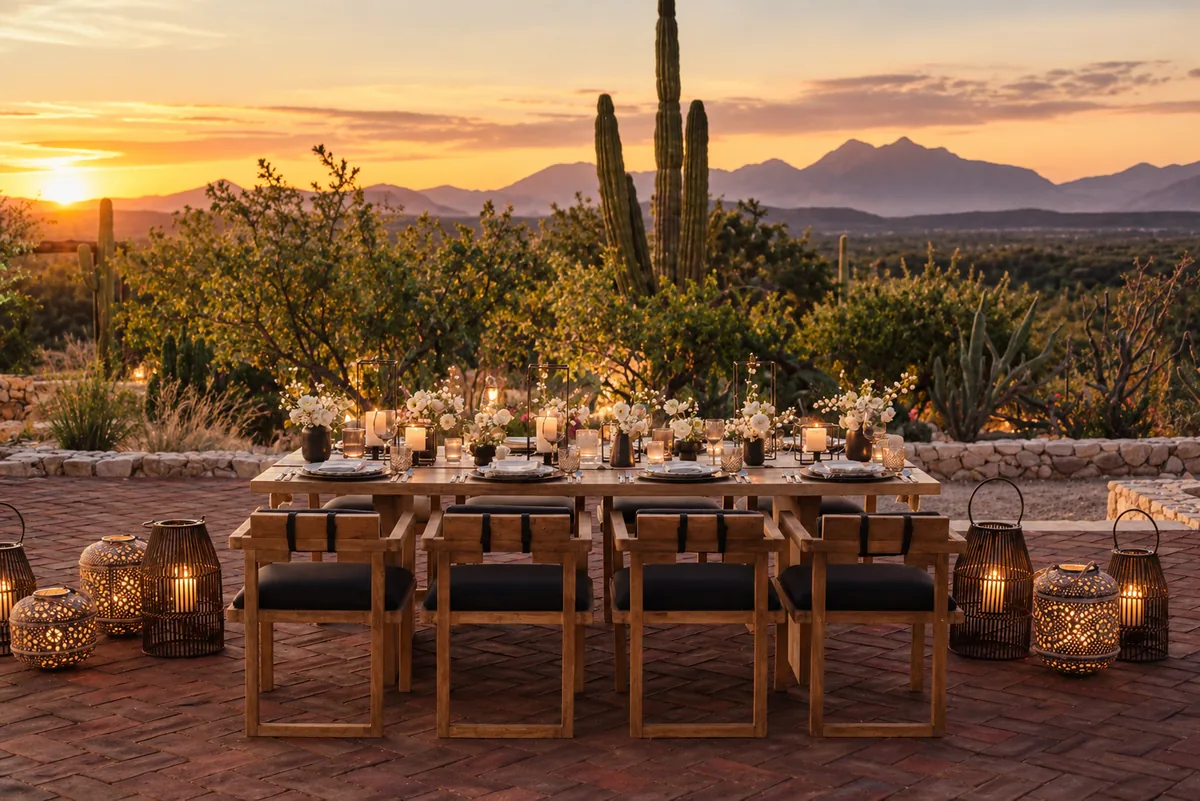
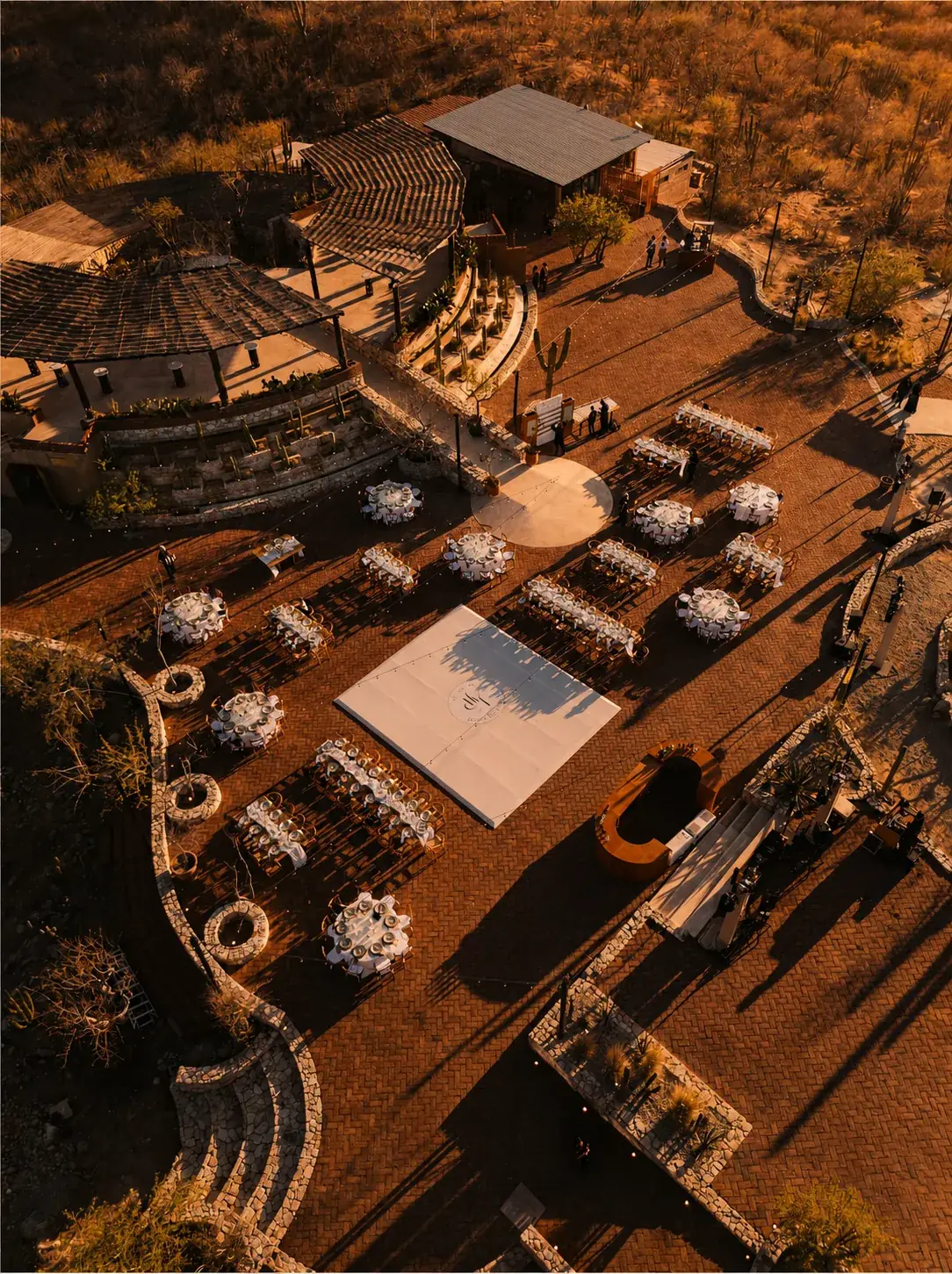
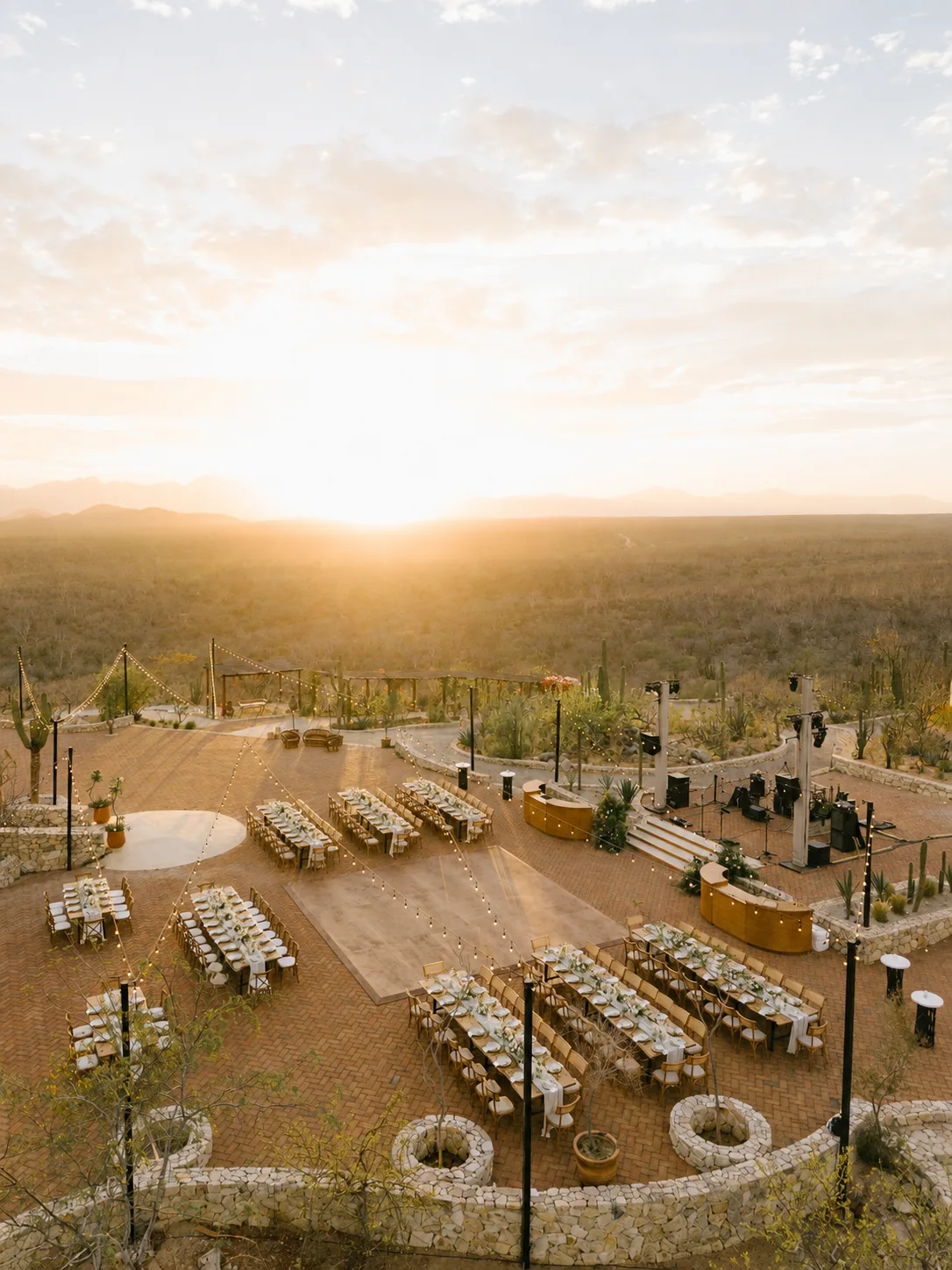
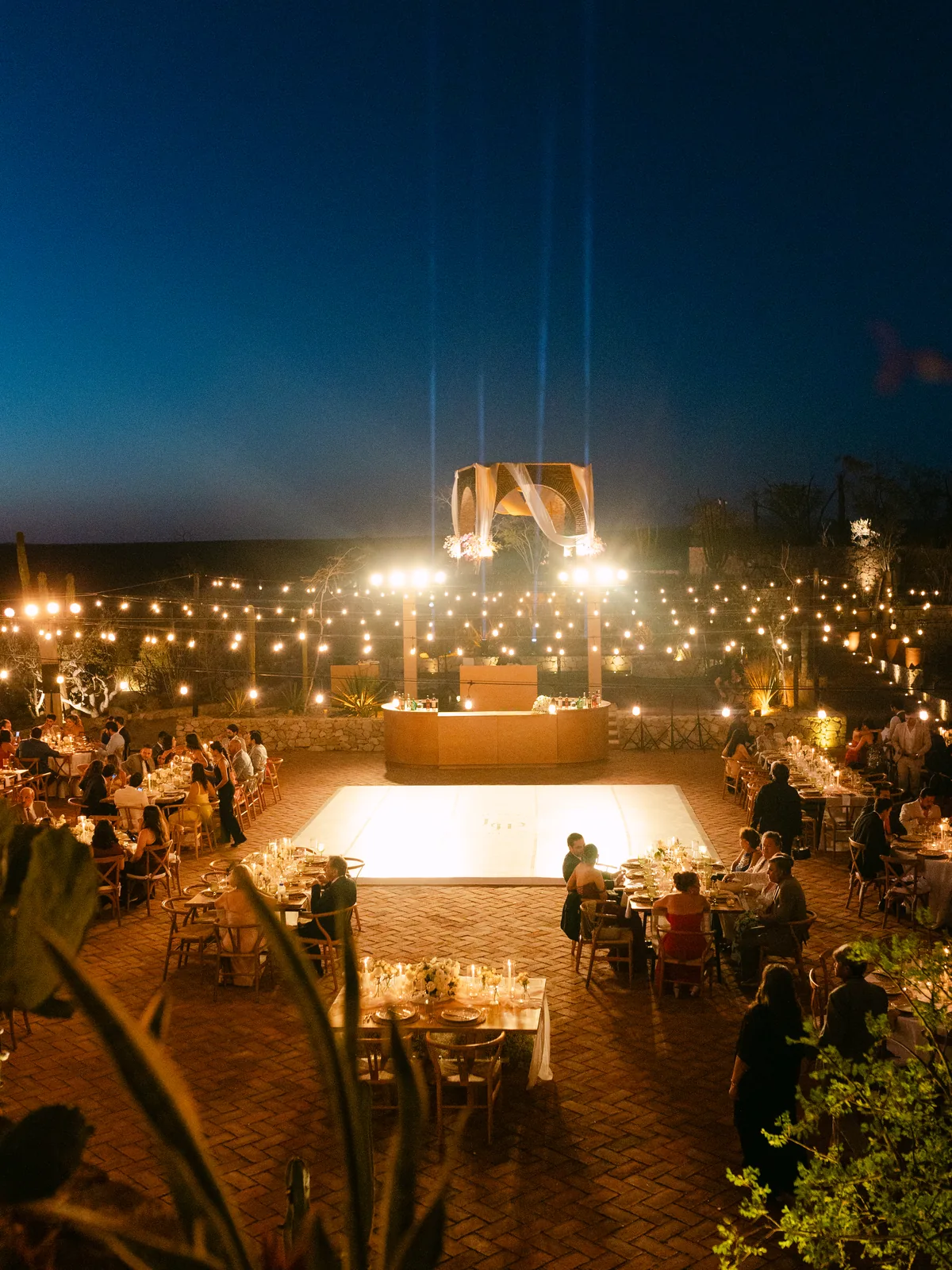
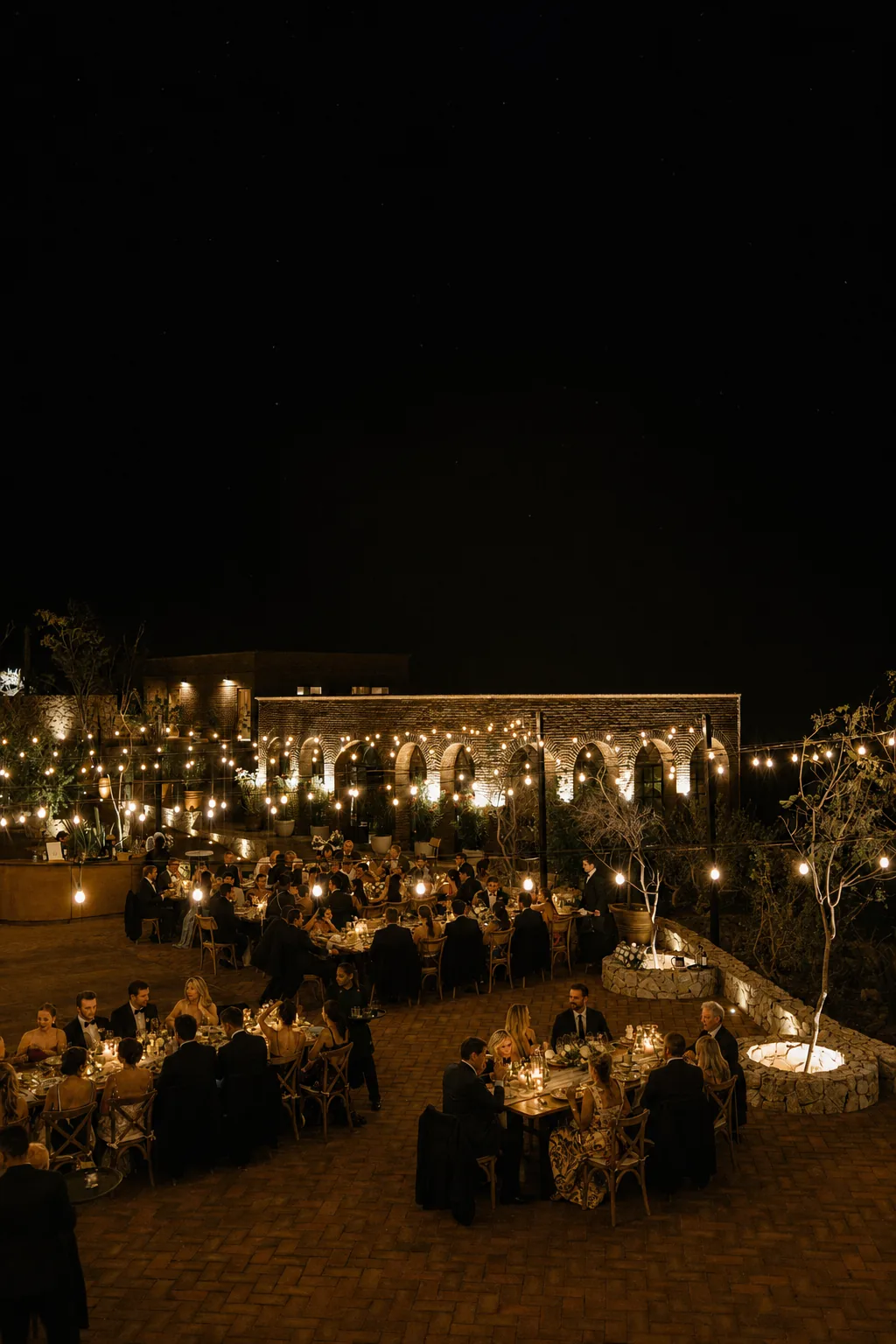


The estate sits twenty-five minutes from downtown San José del Cabo — close, but outside the commercial corridor of Los Cabos. Rideshare apps and taxis generally charge a surcharge for the area, which is why we recommend letting us arrange private transport for you. We work closely with private drivers we trust, who know the road and offer far better rates.
Driving yourself is just as good, and the drive is worth taking. The road runs through the desert and is beautiful the whole way. The only thing to watch for is the local wildlife: Baja is known for its free-range policy, so you will come across animals on the road. Drive slowly, and enjoy the ride.
Once you turn onto the property there are two kilometers of dirt road, through cardón and open desert, where you will likely pass deer, cattle and burros along the way. The road is kept in perfect condition — any car makes it without difficulty — and it is well signed from the gate.
Please use Google Maps only. Other navigation apps route incorrectly and will leave you on the wrong road. It is the one thing we ask of every guest before setting out.
Weddings, dinner at the Chef's Table, a morning in the kitchen, a ride into the desert, or a gathering of your own.
See the experiences →